



A Victorian Vision Unveiled
Shekhar Suman's four-storey Victorian penthouse in Mumbai is far more than just an opulent dwelling; it's a living narrative of his life, infused with
nostalgia and the aesthetic sensibilities of his wife, Alka. This unique residence masterfully fuses classic English charm with deeply personal elements, creating an ambiance that transport visitors. The interior design is a careful curation of soft pastel tones, exquisite antique furnishings, and distinctive collectibles gathered from global travels. Every corner of the house is designed to impress, from grand chandeliers and intricately carved pillars to a breathtaking balcony offering panoramic views of the sea and hills. The space is a deliberate theatrical experience, where the decor doesn't merely adorn but actively tells stories, reflecting a life lived with passion and an eye for beauty. This sophisticated blend of personal history and grand design sets the stage for a truly unique home environment.
London in Lokhandwala
Filmmaker and choreographer Farah Khan was immediately struck by the extraordinary ambiance of Shekhar Suman's penthouse, famously exclaiming, "I have not seen a house like this in Lokhandwala. Not Lokhandwala, I have not seen a house like this in Bombay. You will feel that you have come to London." This immediate reaction underscores the success of the Suman’s design vision: to create an immersive environment that transcends its geographical location. The interiors are meticulously crafted to evoke the sophisticated elegance of London, offering a transportive experience for anyone who walks through the door. The house is a testament to how thoughtful design and the incorporation of personal taste can create a space that feels both grand and intimately familiar, blurring the lines between an urban residence and a European escape.
Family: The True Foundation
Despite the undeniable visual splendor and luxurious appointments of his Victorian penthouse, Shekhar Suman consistently brings the conversation back to the essence of what truly constitutes a home. He poignantly states, "Let me tell you, no matter how beautiful a house you make, no matter how big a house you make, a house is made by the family." Suman emphasizes that the grandeur of architecture or the size of a dwelling is secondary to the emotional bonds and life shared within its walls. He contrasts this perspective by noting that even the most magnificent structure loses its significance if not filled with the warmth and presence of loved ones, suggesting that a small house filled with family is infinitely more valuable than a large, empty one. This philosophy highlights the intrinsic value he places on relationships over material possessions, defining home as a sanctuary built on human connection.
Living Room's Grandeur
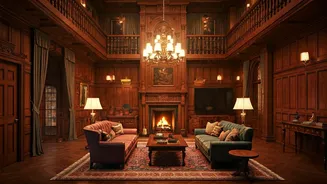
The living room serves as the heart of Shekhar Suman's home, a space where comfort and sophisticated design converge. Plush seating arrangements invite relaxation, while an ornate fireplace-style console adds a touch of vintage allure. The room is bathed in a warm, ambient glow, achieved through a thoughtful combination of chandeliers, elegant table lamps, and strategically placed wall lights. Decorative elements, such as striking bust sculptures, artfully arranged vases, and carefully selected framed artworks, contribute to a curated, gallery-like atmosphere. Large glass doors seamlessly connect the indoor elegance with the serene outdoor space of the balcony, blurring the lines between interior and exterior. A particularly captivating feature is the antique chess table, an intricately designed piece that stands as a testament to Shekhar's appreciation for vintage craftsmanship, with its unique sculptural chess pieces and elaborately carved table legs.
Serene Bedroom Sanctuary
In contrast to the rich detailing of the living area, the master bedroom offers a tranquil, hotel-like retreat. A generously sized bed, dressed in neutral tones, is positioned against a beautifully panelled wooden backdrop. This calming center is flanked by identical bedside tables, each adorned with classic lamps that cast a soft, golden luminescence, enhancing the room's serene atmosphere. Large framed mirrors on either side of the bed visually expand the space, creating an illusion of greater depth and openness. Personal photo frames are thoughtfully placed, adding an intimate and cherished touch to the otherwise uncluttered environment. The deliberate choice of a muted color palette—featuring ivory, beige, and pale wood finishes—further reinforces the room's peaceful and serene character, making it an ideal sanctuary for rest and rejuvenation.
Balcony's Urban Oasis
Providing a refreshing counterpoint to the meticulously designed interiors, the balcony exudes a slightly more relaxed and natural vibe. This outdoor extension of the home is transformed into a vibrant urban garden, brimming with a diverse collection of potted plants of varying sizes. The greenery softens the urban landscape, offering a tranquil escape and a breath of fresh air. It serves as a delightful space to unwind, connect with nature, and enjoy the surrounding views. The presence of plants not only adds aesthetic beauty but also contributes to a sense of calm and well-being, making the balcony a cherished part of the penthouse where one can retreat from the bustle of city life and find a moment of peace amidst the lush foliage.
Aesthetic Influences Unpacked
Shekhar Suman reveals that his distinct design aesthetic was significantly shaped by his wife, Alka, acknowledging her profound influence on his vision for their home. He admits, "Because of Alka… somewhere, I don’t know, from inside, it was a big wish that whenever we used to go to England, that such a house should be ours." This indicates that the desire for an English-style home was a shared aspiration, nurtured by Alka's taste and perhaps her background in design. Suman further elaborates on how cohabiting with someone possessing a strong design sensibility naturally fosters personal growth and an evolution of one's own preferences, stating, "Yes, you learn some things while staying with Alka because she is a designer and she has a great sort of taste." This highlights the synergistic nature of their design collaboration, where Alka’s expertise and vision were instrumental in bringing the dream of a Victorian London-esque home to life in Mumbai.
Treasures and Memories
Within Shekhar Suman's home, every object possesses a story, serving as a tangible link to cherished memories and personal aspirations. He points to the antique chessboard in the living room, a piece acquired during a trip to New York, recalling its significant cost and their decision to purchase it despite the expense: "We picked it from New York… it was very expensive. Still we bought it." This anecdote exemplifies how personal belongings can become repositories of memory, encapsulating moments, decisions, and shared experiences. Beyond their functional purpose, these items imbue the living space with a unique character and emotional depth, transforming the house into a personal museum of life's journeys and significant events. These carefully chosen artifacts contribute to the rich tapestry of the home's narrative, reflecting the couple's life, travels, and their appreciation for timeless craftsmanship and sentimental value.
Mood and Environment
According to Sonal Khangarot, a licensed rehabilitation counselor and psychotherapist, the elements of color, lighting, and décor profoundly impact our emotional state. She explains that the brain constantly processes its surroundings for cues related to safety and stimulation, and this processing is directly influenced by environmental factors. Research in Environmental Psychology supports this, showing how colors can affect emotional arousal; cool tones like blue and green tend to have a calming effect on the nervous system, while intense warm colors might increase alertness or even anxiety, aligning with Arousal Theory. Lighting plays a critical role, especially natural light, which helps regulate our circadian rhythm, boosts serotonin levels, and improves emotional regulation. Conversely, inadequate lighting can contribute to low moods, a phenomenon observed in Seasonal Affective Disorder (SAD). Khangarot also notes that décor styles, such as ornate Victorian designs, while aesthetically pleasing, can sometimes feel mentally demanding due to the higher processing load they require, a concept explained by Cognitive Load Theory. Ultimately, spaces that resonate with personal identity and offer a balanced sensory experience are crucial for promoting psychological well-being and a harmonious home environment.
Balancing Ornate Interiors
Highly detailed or ornate interiors, while visually appealing, can indeed become overwhelming for the brain, which has to process a significant amount of visual information simultaneously, as explained by Cognitive Load Theory. This can lead to increased mental effort, potentially resulting in fatigue, irritability, or restlessness, particularly for individuals already experiencing stress. However, such interiors can still be perceived as warm and aesthetically pleasing if skillfully balanced. Khangarot suggests that creating contrast is vital: pairing intricate design elements with simpler, neutral areas allows the mind space to rest. Limiting the number of focal points prevents visual competition, and softer lighting can enhance the soothing quality of a space, making it feel less intense. Furthermore, incorporating décor that holds personal meaning significantly boosts comfort, aligning with the concept of Place Identity. A well-balanced space achieves both visual richness and a sense of psychological ease, ensuring that even elaborate designs contribute positively to one's well-being rather than causing overload.