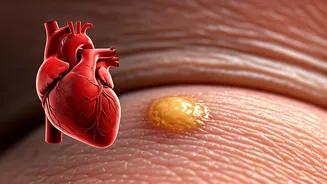








What is Xanthelasma?
Xanthelasma refers to small, soft, yellowish patches or deposits that typically emerge on or around the eyelids, often near the inner corners. These formations
are essentially accumulations of cholesterol and fatty substances beneath the skin. While they are generally painless and don't pose an immediate threat to vision or physical comfort, their appearance is a significant physiological signal. They tend to manifest more frequently in women, usually after the age of 40. Although the deposits themselves are benign, their presence on the delicate skin of the eyelids, which possesses a rich blood supply, often makes them one of the earliest visible signs of a systemic issue, specifically related to how the body manages lipids and cholesterol.
The Heart Disease Link
The crucial implication of xanthelasma is its strong association with elevated cholesterol levels and an increased risk of cardiovascular ailments. When cholesterol builds up under the skin to form these yellow deposits, it often mirrors a broader pattern of dyslipidemia within the body. High cholesterol, a well-established precursor to heart attacks and strokes, finds a visible manifestation in xanthelasma. Cardiologists view these eyelid deposits not as an isolated skin condition but as a potent external marker of internal vascular compromise. This connection suggests that the same processes leading to plaque formation in the arteries might also be responsible for the lipid accumulation visible on the eyelids, underscoring the importance of investigating underlying cardiovascular health when xanthelasma is present.
Atherosclerosis Indicator
Xanthelasma serves as a significant indicator of subclinical atherosclerosis, a condition where plaque begins to silently develop within the arterial walls, often before any overt symptoms arise. The formation of these yellowish eyelid deposits is believed to reflect the same underlying lipid metabolism disturbances that contribute to hardening and narrowing of the arteries. This means that the presence of xanthelasma can signal a heightened predisposition to coronary artery disease, myocardial infarction (heart attack), and stroke. The clinical relevance of this association is well-documented, with studies indicating that individuals with xanthelasma have a considerably higher likelihood of experiencing such cardiovascular events, sometimes even preceding the onset of classic symptoms like chest pain, making it an invaluable external clue to internal vascular risk.
Beyond Normal Cholesterol
Intriguingly, xanthelasma can appear even when routine cholesterol tests yield normal results, highlighting that traditional lipid panels may not always capture the full picture of cardiovascular risk. This scenario can point to more subtle or hidden lipid abnormalities, such as altered cholesterol particle size or function that standard tests overlook, or underlying genetic lipid disorders. It might also suggest issues like reduced HDL (good cholesterol) efficiency or increased inflammation and endothelial dysfunction, which are precursors to vascular disease. Therefore, a 'normal' cholesterol reading should not be considered a guarantee of low risk if xanthelasma is present; further, more comprehensive cardiovascular assessments are warranted.
Comprehensive Health Check
When xanthelasma is detected, a more thorough cardiovascular evaluation is strongly recommended to pinpoint potential underlying issues. This typically involves a fasting lipid panel to assess total cholesterol, LDL, HDL, and triglycerides, along with advanced lipid testing that delves into LDL particle numbers, ApoB, and Lp(a) for a deeper insight into lipid risk. Blood sugar levels and HbA1c are checked to evaluate for diabetes, while blood pressure is assessed. Other crucial tests may include a high-sensitivity C-reactive protein (hs-CRP) test to measure inflammation, and potentially an ECG or echocardiogram if indicated by clinical signs. In certain patients, a coronary artery calcium (CAC) score can provide a quantifiable measure of plaque buildup in the coronary arteries. A detailed family history also plays a vital role in assessing genetic predispositions to cardiovascular disease.
Addressing the Root Cause
It is imperative to understand that surgically removing xanthelasma merely addresses the visible symptom and does not resolve the underlying cause of the lipid imbalance or vascular concern. The elevated cardiovascular risk persists unless the metabolic and vascular issues driving the xanthelasma are effectively managed. If cholesterol abnormalities remain unchecked, there is a high probability of recurrence of the eyelid deposits. Furthermore, cosmetic removal procedures themselves can carry potential side effects, including skin discoloration, scarring, pain, or even rare instances of eyelid distortion. Therefore, the primary focus should always be on treating the root cause to mitigate long-term health risks and prevent further complications.