





Batter's Key Role
The initial step towards a successful air fryer cake lies in the preparation of the batter. It's crucial to follow the recipe precisely, paying close attention
to measurements and ingredients. Overmixing can result in a tough cake, whereas under-mixing might lead to uneven baking. Moreover, the consistency of the batter should be considered; it should not be too thick or too thin. A batter that's too thick will bake slowly and might be dry, while a thin batter could spread too much. Achieving the right consistency is pivotal for getting a cake that rises beautifully and has a tender crumb. Remember that precision in batter preparation is fundamental when baking in an air fryer to ensure the best results.
Prep Air Fryer Properly
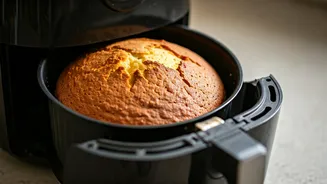
Preparing the air fryer is another essential step. Start by lightly greasing the air fryer basket or using parchment paper to prevent the cake from sticking. Parchment paper, cut to fit the basket, ensures easy removal and prevents messy cleanups. Preheating the air fryer is equally important. Preheat the air fryer to the temperature specified in your cake recipe, usually around 320-350°F (160-175°C). This allows the cake to cook evenly from the start, contributing to a better rise and overall texture. Avoid overcrowding the basket, allowing enough space for air circulation. Proper preparation of the air fryer ensures that heat circulates effectively, facilitating uniform cooking and preventing a cake that is raw in the center or overcooked on the edges.
Control the Temperature
Maintaining the correct temperature is vital for air fryer baking success. Air fryers often cook faster than traditional ovens, so the cooking time and temperature may need adjustments. Start by setting the temperature as directed in your cake recipe, but be prepared to make changes. Keep a close eye on the cake during the baking process and consider lowering the temperature slightly if the edges start to brown too quickly. Using a toothpick test to check for doneness is essential. Insert a toothpick into the center of the cake; if it comes out clean, your cake is ready. A lower, more controlled temperature often prevents the exterior from over-baking before the interior is fully cooked. Careful temperature management leads to a cake that is cooked perfectly all the way through.
Choose Right Pan
Selecting the appropriate pan is another critical factor. The size and shape of the pan should fit comfortably within your air fryer basket, leaving space for air circulation. Round or square cake pans that are specifically designed for air fryers often work well, as they are typically sized appropriately. Avoid using pans that are too tall or wide, as they may restrict airflow and prevent even cooking. Consider using silicone pans, which are flexible and make it easier to remove the cake without it breaking. Also, the material of the pan can affect the cooking time. Darker pans absorb heat more quickly, potentially speeding up the cooking process, so keep an eye on your cake. Choosing the right pan enhances heat distribution, leading to evenly baked cakes with a superior texture and appearance.
Baking Time is Key
Carefully monitoring the baking time is essential when using an air fryer. Air fryers often cook more rapidly than conventional ovens, requiring you to adjust the baking time stated in your recipe. It's best to start checking the cake a few minutes before the minimum baking time suggested. Use the toothpick test as your primary indicator of doneness. Insert a toothpick into the center; if it emerges clean or with a few moist crumbs, the cake is ready. Avoid the temptation to open the air fryer frequently during baking, as this can cause temperature fluctuations and affect the final result. Accurate timing prevents over or under-baking, helping you achieve a perfectly cooked cake with an ideal texture.
Cooling and Serving
Allowing the cake to cool properly after baking is crucial. Once the cake is done, carefully remove it from the air fryer and allow it to cool in the pan for a few minutes before inverting it onto a wire rack. Cooling in the pan initially prevents the cake from breaking. Once inverted, continue to cool the cake completely on the wire rack, allowing air to circulate freely. This helps prevent the cake from becoming soggy. After the cake has completely cooled, you can frost or decorate it as desired. Proper cooling ensures the cake's structure is set, and it prevents condensation. Allowing adequate cooling time maintains the cake's flavor, texture and makes it easier to handle and decorate.