







Gravity's Missing Role
As humanity ventures further into the cosmos, the physiological toll of weightlessness remains a significant hurdle for prolonged space missions. Emerging
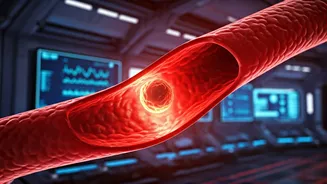
research indicates a potentially serious, yet often undetected, threat for astronauts: Venous Thromboembolism (VTE). On Earth, gravity plays a crucial role in directing bodily fluids, particularly blood, downwards towards the legs. However, in the unique environment of orbit, this gravitational pull is absent, leading to a dramatic upward shift of fluids. Blood consequently tends to pool in the upper body, specifically within the internal jugular veins. This stagnation, coupled with reduced blood flow in a weightless state, creates conditions conducive to clot formation. While scientists are diligently investigating the intricate biological factors that may exacerbate this risk during spaceflight, understanding and managing these circulatory anomalies is paramount for ensuring astronaut well-being, especially as missions to destinations like Mars become a more tangible prospect.
Microgravity's Blood Flow Shift
The absence of gravity in space profoundly redefines how blood circulates throughout the human body, particularly influencing the pressure dynamics within the internal jugular vein. On our home planet, gravitational force assists in the venous return of blood from the head back to the heart. In a microgravity environment, however, this fundamental force is missing. This results in a significant 'fluid shift,' where blood accumulates in the thoracic region, leading to an upward redistribution. Studies have demonstrated that this fluid accumulation can significantly impede, or even reverse, the normal flow of blood within the neck's internal jugular veins. Research published in academic journals has highlighted that such stagnant blood flow creates an environment ripe for thrombus development. These blood clots, if they dislodge, pose a grave risk, potentially traveling to the lungs and causing a life-threatening embolic event, underscoring the critical nature of this phenomenon.
Combating Clots in Orbit
On Earth, the simple act of walking naturally stimulates blood circulation in the legs, acting as a natural deterrent against clot formation. In the weightless environment of space, however, this mechanism is unavailable. To counteract this, astronauts engage in rigorous resistance training using specialized equipment such as the Advanced Resistive Exercise Device (ARED). This device is engineered to mimic the gravitational forces that would typically act upon the body, ensuring that the mechanical stresses are transmitted to the bones and muscles. While ARED effectively preserves bone density and muscle mass, it does not directly address the 'fluid shift' that causes blood to pool in the upper body, including the neck. In response, NASA is actively exploring innovative technologies like Lower Body Negative Pressure (LBNP). This system utilizes specially designed garments that create a vacuum around the lower body, effectively drawing blood back down into the legs and thereby alleviating pressure on the jugular veins.
Diagnosing the Undetected
Given the lack of comprehensive medical facilities aboard spacecraft, astronauts are often required to perform many diagnostic procedures themselves, with guidance from physicians on Earth via remote communication. The primary tool employed for assessing crew health in orbit is high-resolution ultrasound (HRUS). This diagnostic process is conducted remotely, with astronauts manipulating the HRUS equipment while Earth-based physicians provide instructions through a two-way video link. Remarkably, the first documented instance of an asymptomatic blood clot in space was identified in 2019. This discovery was not a result of an astronaut experiencing symptoms but rather occurred during a routine research study utilizing HRUS, highlighting the challenges of detecting these 'silent' threats.
Space-Altered Clot Properties
Research suggests that the physical characteristics of blood clots may differ depending on the environmental conditions under which they form, including the presence or absence of gravity. In the microgravity conditions prevalent in space, blood clots have been observed to possess thicker fibrin networks. This denser structure can render them more resilient to the body's natural mechanisms for dissolving clots. Scientists are continuing to delve deeper into how microgravity influences both the formation of these clots and the efficacy of potential treatments. Encouragingly, standard anticoagulant medications have already been successfully employed to treat a clot that was detected in an astronaut during a mission, offering a beacon of hope for managing this risk.