





Sea Otters' Fierce Side
While known for their charming hand-holding while floating and clever use of tools to crack open shellfish, sea otters possess a more aggressive nature
than their appearance suggests. Male sea otters have been observed engaging in forceful mating behaviors, which can include biting females and persistently harassing them. In rarer, more disturbing instances, they have even been documented attacking young seals, revealing a predatory side that belies their otherwise endearing image. These behaviors often stem from complex social dynamics and competition within their species.
Koalas' Hidden Roar
These tree-dwelling marsupials, often perceived as passive and docile due to their extensive sleeping habits (averaging 18-22 hours a day), harbor a surprisingly combative streak. During the mating season, male koalas emit deep, resonant roars. These powerful vocalizations, some of which are subsonic, serve as a critical signal of their size and dominance to rivals. The calm, almost toy-like demeanor they usually present masks this loud and assertive side, essential for establishing territory and attracting mates within their species.
Dolphin's Bullying Tendencies
Dolphins are frequently lauded for their intelligence and apparent friendliness towards humans, often engaging in playful interactions and performing remarkable feats. However, beneath this amiable exterior lies a propensity for bullying and aggression. These marine mammals have been observed tormenting their prey by tossing seals and other pinnipeds, and they engage in violent confrontations with other species. Shockingly, they have also been known to kill porpoises and calves, behaviors linked to the establishment of social hierarchies and competition for resources, showcasing a darker side to their social structure.
Praying Mantis Mating Rituals
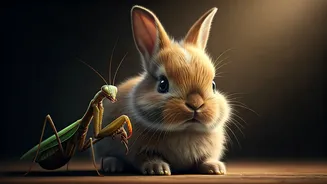
The delicate stillness and graceful movements of the praying mantis can be deceiving. A particularly unsettling aspect of their life cycle involves sexual cannibalism, where the female often consumes the male during or immediately after mating. This act, while grim, serves a vital evolutionary purpose by providing the female with essential nutrients to produce and nurture her eggs, especially if food is scarce. This survival strategy, though efficient for the species, presents a stark and eerie contrast to the insect's otherwise serene appearance.
Cats' Disturbing Gifts
For many cat owners, the habit of their feline companions bringing home 'gifts' is a well-known, if sometimes unsettling, reality. Domestic cats, driven by their innate hunting instincts, often present their humans with prey, which can range from fully intact to partially deceased creatures. This behavior is interpreted as an expression of their natural drive to share resources, mark territory, or even a peculiar form of affection, demonstrating their wild heritage within a domestic setting.
Anglerfish: Parasitic Union
In the extreme depths of the ocean, anglerfish exhibit one of nature's most bizarre reproductive strategies. While some species possess striking, bioluminescent lures, their mating process is exceptionally unusual. Tiny male anglerfish attach themselves permanently to the much larger females, fusing their bodies and becoming a parasitic source of sperm. A single female may host multiple males, who essentially function as dedicated reproductive organs, a remarkable adaptation for survival and procreation in the challenging deep-sea environment.