






The AI Uprising
The emergence of ChatGPT in late 2022 sent ripples through the technology industry, catching even Google's leadership off guard. During a conversation
held at Google's Manhattan offices, CEO Sundar Pichai candidly recounted the pivotal moment when he realized the competitive landscape of artificial intelligence had drastically intensified. Despite Google having publicly identified itself as an "AI-first" organization as far back as 2015, Pichai admitted that the sheer velocity of this AI evolution was a significant surprise. He recalled his immediate, visceral response upon first encountering OpenAI's groundbreaking chatbot: "Wow, this technology is going to diffuse earlier and faster than we were expecting." Pichai characterized this initial feeling as a unique blend of apprehension and exhilaration, a sensation he described as "uncomfortably exciting." It was a clear signal that the AI race, long underway internally, had just accelerated dramatically on the public stage, demanding an immediate and potent response.
Internal Response & Development
Interestingly, Google's own advanced research divisions possessed all the foundational components necessary for developing a sophisticated AI chatbot. However, it was OpenAI that ultimately succeeded in integrating these elements into a widely accessible product that quickly captured global attention. Reports from that period indicated that Google initiated a "Code Red," a company-wide alert signifying an urgent and critical situation, prompting employees to mobilize with great haste. Pichai elaborated on this period of intense activity, explaining that this concerted effort was instrumental in the eventual development of Gemini 3, Google's most recent and formidable lineup of artificial intelligence models. Launched in late 2025, the Gemini 3 Pro variant has already demonstrated superior performance, surpassing competitors from OpenAI and Anthropic in a variety of established industry benchmarks, showcasing the success of Google's rapid response.
A Competitive Shift
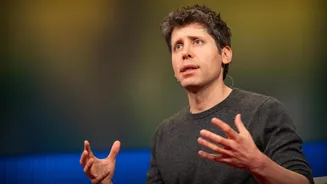
The impact of ChatGPT's release was so profound that it reportedly prompted OpenAI's own CEO, Sam Altman, to issue a "Code Red" internally. He cautioned his team in a private memo that the coming period would be "rough for a bit" as Google strategically regrouped and reasserted its leadership in the AI space. This wasn't the first time Pichai had publicly addressed the significance of ChatGPT's debut. Speaking at Salesforce's Dreamforce conference the previous year, he acknowledged that OpenAI merited commendation for being the first to release their chatbot, even though Google had been actively developing comparable technologies behind the scenes. Pichai noted that in an alternative scenario, Google might have launched its own chatbot a few months later, but emphasized that the product had not yet met Google's rigorous quality standards at the time of ChatGPT's release.
Full-Stack Innovation
Pichai further elaborated on Google's long-standing methodology for innovation, which he described as a "full-stack" approach. This strategy involves meticulously refining every aspect of the AI development pipeline, from the underlying infrastructure and the intricacies of model training to the computational resources required during testing phases. He explained that while external observers might have perceived a period of quietude or a perceived lag from Google, the company was diligently laying the essential groundwork and assembling all the necessary components. This comprehensive preparation allowed Google to execute its subsequent advancements with precision and speed, demonstrating a strategic vision that extended far beyond just the visible end-product. This meticulous, layered approach ensured that when Google was ready, its AI offerings would be robust and competitive.