





Ocean's Fertile Giants
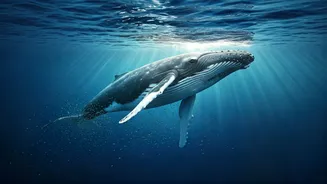
While often overlooked in discussions about climate control, whales are actually crucial to maintaining planetary health, largely through their waste.
Their droppings are far from insignificant; they act as a natural fertilizer, stimulating the growth of microscopic marine plants known as phytoplankton. These tiny organisms are fundamental to life on Earth, not only by producing the oxygen we breathe but also by absorbing substantial amounts of atmospheric carbon dioxide. This intricate relationship highlights how even the seemingly minor aspects of nature hold immense power in regulating our global climate.
Nutrient Powerhouse
Whale waste is a rich source of essential nutrients like iron, nitrogen, and phosphorus. These elements are indispensable for the flourishing of phytoplankton, which form the very foundation of the marine food web. The deposition of nutrient-rich waste, particularly at the ocean's surface, ensures that the surrounding waters are vibrant and supportive of diverse life. This fertilization effect is critical for maintaining the health and productivity of entire ocean ecosystems, demonstrating the profound impact of whale defecation on marine biodiversity.
Phytoplankton's Climate Role
Phytoplankton are not just vital for ocean life; they are also significant players in controlling Earth's climate. Through the process of photosynthesis, they absorb vast quantities of carbon dioxide from the atmosphere, releasing oxygen as a beneficial byproduct. In fact, a substantial portion of the oxygen we rely on for survival is generated by these microscopic plants. By supporting the proliferation of phytoplankton, whales indirectly contribute to reducing atmospheric carbon levels, playing a key role in the planet's carbon cycle and overall climate stability.
The Whale Pump Effect
Scientists have coined the term 'whale pump' to describe the nutrient transport mechanism facilitated by these marine mammals. Whales feed on nutrient-rich organisms in the deep ocean, and then ascend to the surface to excrete waste. This vertical movement effectively transfers essential nutrients from the ocean depths to the sunlit surface waters. Without this 'whale pump,' many surface ocean areas would be nutrient-poor, severely limiting the growth of phytoplankton and consequently impacting the entire marine ecosystem and its climate-regulating functions.
Carbon Sequestration Boost
The increased growth of phytoplankton, spurred by whale activity, has a direct impact on carbon sequestration. As these microscopic plants multiply, they effectively lock away atmospheric carbon dioxide. When phytoplankton eventually die, they sink to the ocean floor, taking the captured carbon with them. This natural process, known as carbon sequestration, is significantly enhanced by the presence of whales, making them vital allies in the ocean's role as a massive carbon sink. Their contribution helps mitigate the buildup of greenhouse gases, indirectly benefiting global climate stability.
Impact of Fewer Whales
Historically, widespread whaling practices led to a drastic reduction in whale populations, disrupting the delicate ecological balance. This decline meant fewer nutrients were cycled back to the ocean surface, directly impacting phytoplankton productivity. The diminished 'whale pump' effect consequently reduced the ocean's capacity for carbon sequestration and oxygen production. The loss of these majestic creatures thus had far-reaching consequences, underscoring the fragility of ecosystems and the profound impact of losing even a single keystone species.
Conservation's Global Reach
Protecting whale populations extends far beyond safeguarding individual species; it is fundamental to maintaining the health of our planet. The conservation of whales is intrinsically linked to preserving ocean productivity and crucial climate processes. Their vital role in nutrient cycling and carbon capture highlights the profound interdependence of all life on Earth. Ensuring their survival is not just an act of conservation but a necessity for maintaining a balanced and stable global environment for future generations.