







Global AI Hub
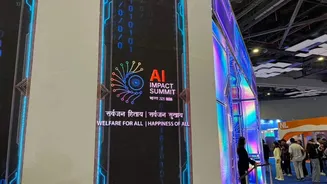
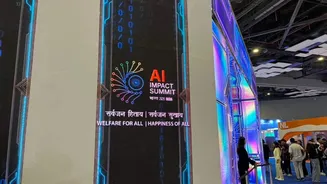
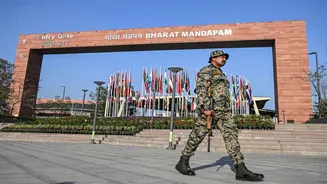
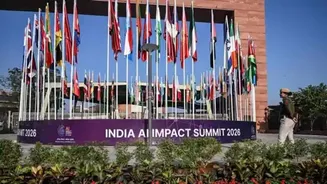
India recently positioned itself at the forefront of global artificial intelligence discussions by hosting an expansive summit, touted as the largest for the Global
South. This multi-day event saw dignitaries from 20 nations, leading technology executives, and over two lakh attendees converge at Bharat Mandapam. The summit showcased more than 800 AI products and featured prominent tech giants like Google, OpenAI, Microsoft, and Amazon. India's strategic emphasis was on its 'IndiaAI Mission' and advancements in indigenous foundational AI models, aiming to solidify its role as a pivotal AI advocate for developing economies and highlighting a new paradigm for AI discussions, shifting focus from regulation to practical application for human welfare.
AI for Welfare
The summit’s overarching theme, "People, Planet, and Progress," signaled a departure from previous AI gatherings that predominantly centered on potential dangers and governance frameworks. Instead, the focus was firmly planted on harnessing AI to enhance daily life, fostering inclusive development through an 'AI for All' philosophy, and collaboratively shaping future international standards for ethical AI deployment. Prime Minister Narendra Modi officially opened the exhibition, personally reviewing a variety of technological demonstrations. Concurrently, Union IT Minister Ashwini Vaishnaw addressed significant concerns surrounding deepfakes, stressing the critical need for developing and deploying technology that is both trustworthy and accountable. Various government ministries established dedicated displays illustrating how AI is being integrated to reform public administration, with the Panchayati Raj Ministry notably presenting tools designed to identify discrepancies and mitigate corruption at local administrative levels, areas historically susceptible to governance challenges.
Innovations in Healthcare
A significant draw at the summit was the array of advancements in healthcare technology. Exhibitors presented sophisticated AI systems engineered to detect serious ailments, including various forms of cancer, through the meticulous early-stage analysis of medical imagery like X-rays and scans. This breakthrough technology holds the potential to substantially reduce treatment expenses and significantly broaden access to advanced medical diagnostics, particularly for individuals residing in remote and underserved rural regions. Beyond diagnostic tools, the exhibition also featured innovative AI applications in telemedicine, enabling remote consultations and patient monitoring, alongside platforms designed for rapid analysis of medical reports and accelerated drug discovery processes, promising to revolutionize patient care and medical research.
AI in Agriculture
The agricultural sector also benefited from a prominent showcase of AI-driven solutions. Demonstrations featured intelligent tools capable of meticulously assessing soil conditions and analyzing complex weather data. These insights empower farmers with informed guidance on optimal crop selection strategies and precise irrigation scheduling, leading to potentially substantial improvements in agricultural productivity and increased farmer incomes. The summit also highlighted AI's application in optimizing urban infrastructure and public services, with displays of advanced traffic management systems aimed at reducing congestion and improving commute times. Furthermore, AI-powered fraud detection platforms were showcased, alongside comprehensive digital governance solutions, collectively signaling a profound and widespread transformation in administrative efficiency and public service delivery across various sectors.
Economic and Workforce Impact
Global data underscores the rapidly escalating strategic importance of artificial intelligence across economies worldwide. In 2024, private sector investment in AI saw a remarkable surge of nearly 45 percent. Projections from the Oliver Wyman Forum indicate that AI could contribute an astonishing $20 trillion to the global Gross Domestic Product by the year 2030. The World Economic Forum's 'Future of Jobs' report offers a nuanced perspective on the evolving labor market, forecasting that while AI might lead to the displacement of approximately 83 million jobs, it is simultaneously poised to generate around 70 million new employment opportunities. This dynamic signifies a major and ongoing transition within the global workforce, necessitating adaptation and reskilling.
Defense and National Security
The integration of artificial intelligence into defense and security operations is experiencing a significant expansion. Recent reports detail its application in sophisticated military targeting systems within active conflict zones, such as Gaza and the ongoing Russia-Ukraine war. India, recognizing the strategic imperative, has also actively incorporated AI capabilities into its own defense framework. The Defence Research and Development Organisation (DRDO) presented related technological advancements at the summit, demonstrating India's commitment to leveraging AI for national security. Globally, current assessments place the United States as the leader in overall AI development, followed by China, with India recognized in the third position, underscoring the nation's growing prowess in this critical field.
India's AI Market Growth
Recent global assessments highlight India's significant strides in artificial intelligence, ranking it third in overall AI leadership, following the United States and China. The Indian AI market, currently valued at ₹11,773 crore as of 2025, is on an impressive growth trajectory. Projections indicate it is expected to expand substantially, reaching approximately ₹12 lakh crore by 2032 and potentially soaring to ₹153 lakh crore by 2035. This rapid expansion is mirrored in workforce adoption, with surveys revealing that a considerable 62 percent of Indian employees regularly utilize AI tools, while an even more substantial 83 percent engage with AI on a weekly basis, demonstrating deep integration into the professional landscape.
Shaping AI's Future
The broader discourse surrounding artificial intelligence, as illuminated by analyses of the summit, centers on the fundamental direction and intent behind its development. The critical question is whether these advanced technologies will be harnessed for constructive societal development and universal human welfare, or if they risk being diverted towards destabilizing activities and malicious purposes. Organizers of the Delhi AI Summit articulated a clear objective: to establish India not merely as a technological powerhouse, but as a responsible global participant actively shaping the future trajectory of artificial intelligence. This involves fostering dialogue, promoting ethical frameworks, and ensuring that AI's transformative potential serves humanity's best interests.