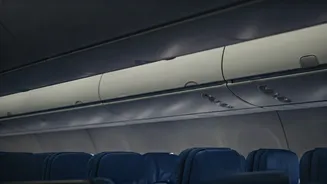








The Noisy Confrontation
In a recent flight, a woman found herself increasingly agitated by the continuous noise generated by fellow passengers. It was observed that the situation
reached a critical point when she politely requested that the children make less noise. The children's guardian responded in a way that significantly escalated the situation and highlighted a divide in expectations on what constitutes acceptable conduct within a confined communal area such as an airplane. The incident revealed a disparity in the definition of appropriate conduct, touching upon the intersection of individual needs and group norms within a shared, enclosed setting. The confrontation triggered a wave of reactions, showcasing the various perspectives on the proper conduct expected of individuals during air travel.
Clash of Expectations
The core of the issue resided in differing views about how to behave in close quarters. The passenger's request demonstrated a desire for peace and quiet, while the reaction of the children's guardian suggested a differing perception of social standards. One person's expectation of tranquillity collided directly with the other's acceptance of children's natural exuberance. These contrasting perspectives reflected broader societal debates concerning acceptable public behaviors and their effect on shared spaces. Such incidents show that standards of acceptable conduct in public are not universally agreed upon, often leading to disagreements. This lack of shared understanding can make communal environments challenging, especially when people are confined in limited spaces for prolonged periods, where escape is limited.
Beyond Flight Discomfort
The encounter goes beyond the specific irritations of a single flight. It reflects a widening chasm in how we think about mutual respect and consideration. It is a reminder that in our daily lives, there are times when expectations can conflict, forcing us to think about boundaries and social conduct. The issue reflects the struggle to balance personal comfort and the reality of a shared world. The incident acts as a clear example of the importance of recognizing the requirements and views of other people, even when they diverge from our own.
Navigating In-Flight Civility
To address problems like this, it is essential to cultivate improved strategies for maintaining in-flight civility. Clear communication is key. When confronted with potentially disruptive behavior, polite and direct communication of concerns is a crucial first step. If such communication does not resolve the issue, seeking the assistance of the flight crew can offer a neutral resolution. Additionally, creating a shared understanding of basic in-flight etiquette can reduce conflict. Airlines could offer guidance to passengers on expected behaviors, from noise management to respecting personal space, which may assist in a more enjoyable flight experience. These actions are useful to minimize disputes and promote a harmonious atmosphere during air travel.
Finding Common Ground
The episode highlights the need for compromise and empathetic understanding in public settings. It asks us to look past our own viewpoints and try to understand the viewpoints of others. Passengers can minimize disagreements by actively practicing patience and mutual respect. Parents may find it useful to keep children involved, carrying entertainment and teaching them how to behave appropriately. Ultimately, promoting a culture of cooperation and understanding can significantly improve the experiences of all travelers. Every individual can contribute to the creation of a more pleasant travel experience by prioritizing empathy and common consideration.