


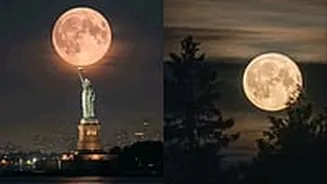
What is a Blue Moon?
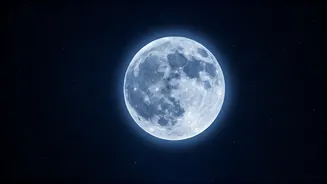
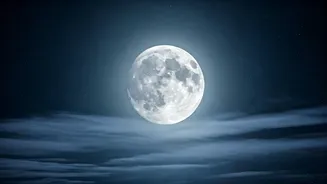
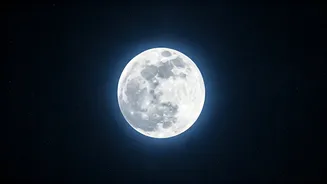
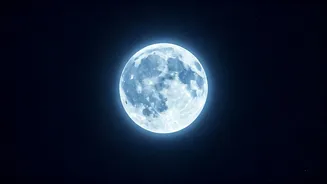
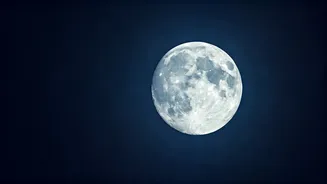
Contrary to popular belief, a Blue Moon doesn't actually appear blue. The term 'Blue Moon' refers to a calendrical anomaly rather than a change in the Moon's
hue. There are two primary definitions for this celestial event. The most common understanding defines a Blue Moon as the second full moon to occur within a single calendar month. For instance, if a full moon happens on the 1st of a month, and another full moon occurs on the 30th or 31st of that same month, the latter is designated as a Blue Moon. This phenomenon is relatively infrequent, typically happening once every two to three years. A less common, older definition considers a Blue Moon to be the third full moon in an astronomical season that unexpectedly contains four full moons instead of the usual three. Both definitions highlight a deviation from the typical lunar cycle, making the occurrence noteworthy, but neither implies any alteration in the Moon's actual color as seen from Earth.
When to Witness the 2026 Event
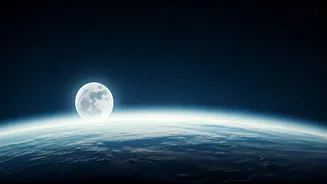
The next significant Blue Moon event is slated for May 31, 2026, a date that will be visible across India and many other regions worldwide. While the event officially occurs around 8:45 UTC, the best viewing opportunities for stargazers in India will be on the night of May 30th and continuing into May 31st, 2026. The optimal times to observe the Moon are generally just after sunset, as it begins its ascent over the eastern horizon, and throughout the late evening or early night when the sky is darkest and clearest. This particular Blue Moon is also predicted to be a 'micromoon,' meaning it will appear slightly smaller in the sky due to its apogee, the point in its orbit farthest from Earth. Therefore, while it won't be a literal blue hue, it will present a full moon experience with a subtle variation in apparent size.
Viewing the Blue Moon
To fully appreciate the spectacle of the May 31, 2026 Blue Moon, strategic viewing conditions are key. India's vast geography offers numerous potential vantage points, but the principle remains the same: seek out locations with minimal light pollution and an unobstructed view of the eastern horizon. Cities, while exciting, often generate enough ambient light to diminish the Moon's brilliance. Therefore, venturing to the outskirts of urban areas, rural settings, or open natural landscapes will significantly enhance visibility. No specialized equipment is strictly necessary to witness this event; the Moon's full phase is easily observable with the naked eye. However, for those seeking a more detailed view of its craters and surface features, a simple pair of binoculars or a camera with a telephoto lens can provide a closer and more captivating perspective. Remember to look east shortly after the sun has set to catch the Moon as it begins its nightly journey across the sky.