





Streamlining Farmer Payouts
The district administration has implemented a proactive outreach program to accelerate the compensation disbursement for thousands of farmers whose land
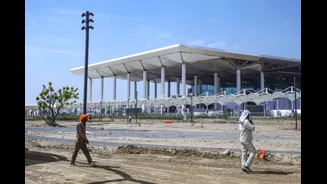
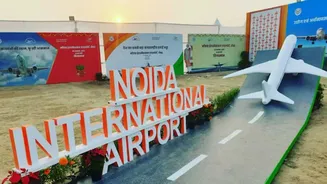
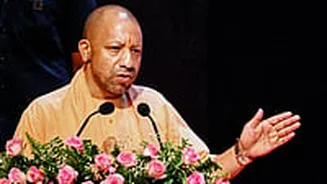
is being acquired for the Noida International Airport. This new system aims to cut through bureaucratic delays that previously extended the payout process for nearly a week. Beginning on Friday, April 3rd, dedicated camps are being established daily in 14 villages across Jewar, including Thora, Neemka Shahjahanpur, Khwajpur, Ramner, Kishorepur, Banwaribas, Parohi, Muqimpur Shivara, Jewar Bangar, Sabauta Mustafabad, Ahmedpur Chaurauli, Dayanatpur, Bankapur, and Rohi. These camps will continue until every affected farmer has received their due compensation. This significant undertaking concerns 1,838 hectares of land designated for Phases 3 and 4 of the airport project, with a compensation rate set at Rs 4,300 per square meter, inclusive of applicable interest. This rate represents a substantial increase from the previous Rs 3,100 per square meter, a revision championed by Uttar Pradesh Chief Minister Yogi Adityanath, who acknowledged the farmers' crucial role in making the airport a reality.
Efficient Camp Operations
District Magistrate Medha Roopam highlighted that these newly established camps are designed to simplify paperwork and expedite the financial settlements. She stated, “Compensation distribution for acquired land will be carried out with complete transparency and speed through these camps.” Each operational camp, strategically located in primary schools, panchayat bhawans, and community centers, will be staffed with essential officials: a revenue inspector, a lekhpal (village accountant), and an amin (village surveyor). This concentrated presence allows farmers to submit their required documents on-site, with the subsequent preparation and verification of these files occurring on the same day. Jewar SDM Durgesh Singh, appointed as the nodal officer for this initiative, explained the practical improvements to The Times of India. Previously, a farmer's compensation file followed a multi-stage process, moving from the lekhpal to the amin, then to the SDM, and finally to the ADM (land acquisition), a journey that typically consumed five to seven days. Singh emphasized, “Through these camps, all this process will be completed in one day.” Singh himself will conduct daily visits to each camp, accompanied by the relevant naib tehsildar, to review files and forward them directly to the Additional District Magistrate (land acquisition) office for the final processing, ensuring a swift and accountable workflow.
Project Phases & Compensation Details
Officials have confirmed that compensation for farmers impacted by Phase 2 of the airport expansion has already been finalized. Current efforts are concentrated on farmers from seven villages—Jewar Bangar, Sadullapur (Modelpur), Falaida Bangar, Karauli Bangar, Tirthali, Dhanpura, and Mehandipur Bangar—whose 189 hectares are being acquired to establish a resettlement and rehabilitation colony. Approximately 1,080 families from these villages are receiving compensation at a rate of Rs 4,300 per square meter. Following the completion of these disbursements, the Yamuna Expressway Industrial Development Authority (YEIDA) will commence the development of the resettlement colony. The ongoing camp initiative specifically addresses the larger land acquisition for Phases 3 and 4, encompassing approximately 1,838 hectares and involving an estimated 16,000 farmer families. As of September 2025, YEIDA had already disbursed over Rs 8,000 crore to around 7,000 farmers for the 2,400 hectares acquired in the first two phases of the airport project. Key rehabilitation benefits provided to date include a revised compensation rate, elevated from Rs 3,100 to Rs 4,300 per square meter for Phase 3, with interest applied as per regulations. Additionally, a one-time settlement transfer saw 554 farmers from six villages, including Dayanatpur, Rohi, Ranhera, and Kishorepur, receive a total of Rs 32.42 crore through direct RTGS payments in a single transaction during a prior compensation round. Farmers were also offered a choice between a Rs 5 lakh compensation package or a permanent employment offer in exchange for their land, and dedicated planning is underway for a rehabilitation colony using land designated for acquisition across seven villages.
Economic Transformation & Farmer Stories
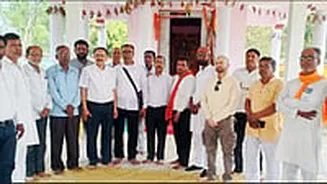
Reports from various news outlets paint a vivid picture of significant economic changes among the affected farming communities. Harminder Singh from Dayanatpur, for instance, received Rs 2 crore for his land. Initially overwhelmed by the sum, he eventually invested in plots of land, purchased a luxury SUV, and transformed his modest home, previously characterized by buffaloes at the entrance, into a spacious, two-story glass-fronted residence. Hanshraj Singh, a 70-year-old farmer also from Dayanatpur, received a total of approximately Rs 9.5–10 crore after parting with 10 bigha in 2019 and an additional 15 bigha as the airport project expanded. He strategically reinvested nearly 30% of this amount into farmland in Karoli village, acquired a plot near the Yamuna Expressway, and allocated funds for long-term household financial stability. His sons are now employed, and he noted that their spending remains judicious. Harinder Singh, who was compensated around Rs 2.4 crore for 12 bigha, opted for the cash payout over a job offer and utilized most of it to buy 60 bigha of agricultural land in Bulandshahr, construct a new house, and place savings into fixed deposits. For older farmers who dedicated decades to cultivating crops like wheat, mustard, and vegetables, these substantial payouts effectively serve as a capital pool, replacing years of unpredictable agricultural income with a significant financial asset. The visible signs of this influx of wealth include newly constructed houses, SUVs parked outside formerly agrarian homes, and increased spending on education, signaling a profound shift in the economic landscape of these once purely agricultural areas.