









Ground Staff Halt Operations
A significant operational hiccup occurred at Mumbai's busy airport when employees of a third-party ground handling agency initiated an industrial action,
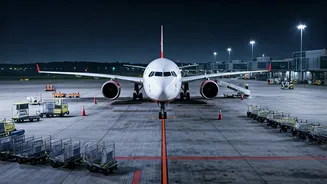
commonly known as a strike. This sudden work stoppage severely impacted Air India and Air India Express flights, affecting essential ground services. Critical tasks such as facilitating passenger disembarkation, unloading luggage, and performing routine aircraft servicing were either dramatically postponed or completely halted. Consequently, passengers arriving on time found themselves unable to leave their aircraft, remaining seated for durations stretching up to an hour and a half. This situation created a ripple effect, leading to extended waiting times for checked baggage for those who did eventually disembark, compounding the passenger experience with a secondary layer of inconvenience and frustration.
Passenger Ordeals Shared
The distress experienced by passengers was vividly communicated through social media platforms. One traveler, a seafarer named Atul Sharma, recounted his experience on Flight AI 2995 from Delhi. He expressed deep disappointment, stating that after arriving over an hour prior, his baggage had yet to be delivered, with staff offering little to no assistance. Sharma highlighted the urgency of his situation, emphasizing that as seafarers, they had a ship to board and any delay could result in severe professional and financial repercussions. Another passenger on Flight AI 2852, which landed at 12:01 PM, reported being confined to the plane for over an hour due to the strike and limited ground staff. The issue affected multiple flights, with at least three, including AI 2852, AI 2874, and AI 2995, publicly confirmed as experiencing these significant delays and prolonged confinement on board.
Airline's Response
In response to the widespread disruption, the airline issued a statement acknowledging the industrial action taken by the ground handling agency's employees at Mumbai airport. They confirmed that this was impacting the operations of both Air India and Air India Express. The airline stated that their airport teams were actively collaborating with all relevant parties involved to mitigate the inconvenience faced by their guests and to expedite the restoration of normal services as swiftly as possible. However, the statement conspicuously omitted the name of the specific agency responsible for the ground handling, did not provide any rationale behind the workers' industrial action, nor did it offer any estimated timeframe for when the situation would be resolved. This lack of specific information left stranded passengers with minimal clarity or recourse.
Ground Handling Importance
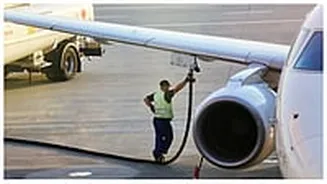
Ground handling services are the unsung heroes of air travel, forming the critical infrastructure that enables flights to operate smoothly. These dedicated workers are responsible for a multitude of essential tasks, including guiding aircraft to their parking bays, operating the aerobridge or boarding stairs, meticulously unloading baggage from the aircraft's cargo hold, refueling the plane, cleaning the cabin, and assisting with passenger check-in processes. When these services are disrupted, the entire flight turnaround process is paralyzed. Arriving aircraft are forced to remain at the gates, departure schedules face cascading delays, and passengers are left waiting inside stationary planes, often with engines turned off. Mumbai airport, a hub that handles over 50 million passengers annually, is particularly susceptible to the domino effect of such stoppages, where a single disruption at a key ground handler can create widespread chaos across terminals within a matter of hours.
Historical Precedents
This incident is not an isolated event for Air India at Mumbai airport; similar disruptions stemming from ground handling disputes have occurred previously. A notable instance took place in 2018 when employees of AIATSL, Air India's own ground handling subsidiary, staged a sudden strike over unpaid Diwali bonuses. That industrial action resulted in the delay of over 37 domestic and international flights, with some experiencing delays of up to three hours. The pattern observed in that situation mirrored the recent events: an abrupt stoppage, a lack of prior warning, and a rapid escalation of disruption. Normal flight operations were only reinstated after direct negotiations between the management and the affected employees, highlighting a recurring vulnerability within the system.
Future Outlook
As of the latest update, Air India has indicated that its operational teams are diligently working towards the complete restoration of normal services at Mumbai airport. However, the specific demands put forth by the ground handling workers and the precise timeline for resolving this industrial standoff remain unconfirmed and unclear. Passengers who are planning to travel are strongly advised to stay informed by checking their flight status proactively before departing for the airport to avoid further inconvenience. The situation underscores the critical reliance on third-party agencies for essential ground operations and the potential for significant passenger impact when these relationships face challenges.