




AI Chips: The Engine
At the heart of automotive AI are specialized chips that power the advanced functionalities of modern vehicles. Developments in chip technology are crucial,
impacting every aspect of a car's performance, from autonomous driving features to infotainment systems. Companies are investing heavily in designing AI chips specifically for automotive applications. For example, announcements regarding new AI chips from Qualcomm, and Tesla's ventures into AI chip development, demonstrate the significance of this component. These chips process vast amounts of data in real time, making split-second decisions and ensuring a seamless driving experience. Ongoing efforts focus on increasing processing power, reducing energy consumption, and enhancing the overall efficiency of these chips, enabling cars to handle complex tasks and respond quickly to various driving conditions. The evolution of these chips marks a fundamental shift in how vehicles are designed and function, setting the stage for more sophisticated and intelligent automobiles.
AI in Vehicle Design
Artificial Intelligence is profoundly influencing the design and development processes of automobiles. Through AI, engineers are leveraging machine learning to optimize vehicle aerodynamics, enhance fuel efficiency, and improve safety features. AI-driven simulations and modeling tools allow designers to test various configurations and predict real-world performance with greater accuracy. This accelerates the design cycle and enables the creation of more innovative and efficient vehicle designs. The use of AI extends to the selection of materials, helping engineers identify the best balance of strength, weight, and cost, leading to lighter, more durable, and environmentally friendly vehicles. Furthermore, AI helps in refining the aesthetics of vehicles, by simulating different lighting conditions and exterior designs before the production stage. This not only enhances the visual appeal of cars but also ensures that the final product meets stringent regulatory requirements and consumer expectations. Overall, AI tools are creating a more efficient, customer-centric, and sustainable approach to automobile design.
AI & Software Integration
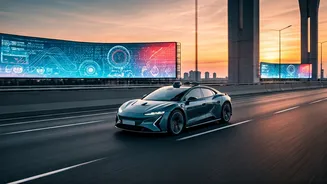
AI's integration within automotive software is revolutionizing how vehicles operate, with a specific focus on areas like autonomous driving, driver-assistance systems, and infotainment. Sophisticated algorithms analyze data from various sensors, cameras, and radar systems to enable autonomous driving capabilities. AI-powered systems can recognize road signs, detect obstacles, and make decisions in real-time. Moreover, the integration of AI enhances driver-assistance systems, offering features like lane-keeping assist, adaptive cruise control, and automatic emergency braking. AI also personalizes the in-cabin experience by adapting to the driver's preferences. It curates music playlists, adjusts climate control settings, and provides real-time traffic updates. The seamless integration of AI-driven software creates safer, more connected, and personalized driving experiences. This development is not just about making cars smarter, but enhancing the overall quality of time spent on the road.
The Future Outlook
Looking ahead, the role of AI in the automotive industry is poised for continued expansion, promising even more innovative advancements. We can anticipate further improvements in autonomous driving capabilities, with vehicles becoming increasingly capable of navigating complex environments without human intervention. The integration of AI will also enhance the car's ability to communicate with infrastructure, leading to a safer, more efficient, and better-coordinated traffic flow. The convergence of AI, electric vehicles, and connected car technology will shape the future of mobility. As AI continues to evolve, vehicles will become even more intuitive and adaptable to individual driver preferences, offering personalized driving experiences. The continued advancements in AI chip development and the software will accelerate the pace of innovation, leading to a new era of automotive technology where vehicles will be more than just transportation; they will become intelligent, connected companions.