





A Transient Event
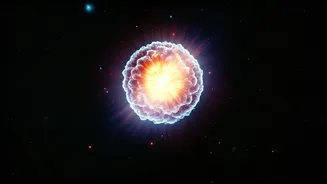
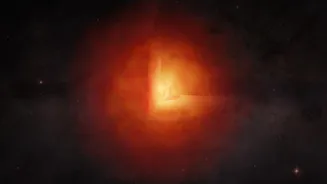
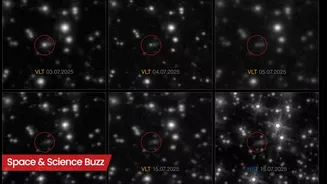
The observed cosmic event presented a unique phenomenon: a seven-hour explosion emanating from a point approximately eight billion light-years distant.
This duration is notably short compared to conventional cosmic events like supernovae, which can last for weeks or months. This rapid flaring, captured by telescopes, signifies an incredibly energetic release of energy within a relatively confined timeframe. Analyzing this type of transient event allows researchers to probe the mechanisms behind these energetic processes. The swift nature of the explosion underscores its uniqueness within the range of observed astrophysical occurrences.
Unveiling the Source
The origin of this seven-hour cosmic explosion is a key focus for researchers, and is currently unknown. The brief duration and intensity suggest a highly energetic process that may differ significantly from known events like stellar explosions. Scientists are working to ascertain whether the event resulted from interactions between black holes, neutron stars, or other compact objects. Another possibility lies in the disruption of celestial bodies. Pinpointing the origin is pivotal to fully understanding the underlying physics and forces that drive it. Further observations and data analysis will aid in confirming the initiating process that caused this brief, yet powerful, explosion.
Light-Years Away
The distant location of this cosmic explosion, some eight billion light-years away, presents significant challenges for its observation and analysis. The light from this event has traversed vast interstellar distances, experiencing significant alterations over such a timescale. This remoteness requires employing powerful telescopes and sensitive instruments. Due to the distance involved, it has taken billions of years for the light from this event to reach us. Despite this challenge, modern astronomical tools are equipped to detect and collect the essential data, opening a window into the conditions and processes of a distant universe. Analyzing this light allows researchers to gain insight into the event's evolution.
Decoding the Data
Astronomers are presently analyzing the data collected from this unusual cosmic explosion to uncover its properties and composition. This involves studying the emitted light across varied wavelengths, from radio waves to X-rays, to comprehend its characteristics. Analyzing the light spectra and its changes over time can give information about the elements involved and the temperature of the event. Sophisticated computer models and simulations also play a key role, enabling scientists to test different theories and to simulate how various cosmic processes could have generated the observed explosion. The data analysis aims to give insights into the physical mechanisms that powered this event.
Future Implications
The discovery of this seven-hour cosmic explosion underscores the dynamic nature of the cosmos and the ongoing exploration of space. Further observations and research into similar events are likely. The study of this rare explosion offers vital data about high-energy processes. By examining the patterns and characteristics of these transient phenomena, scientists may gain a better understanding of the formation and evolution of stars, galaxies, and perhaps even the universe itself. This event provides a platform for testing physical theories. Understanding transient events helps to refine our understanding of cosmic phenomena. Ongoing research continues to enhance knowledge of the universe.