







Transforming North India's Travel
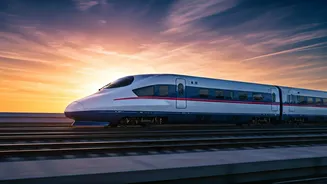
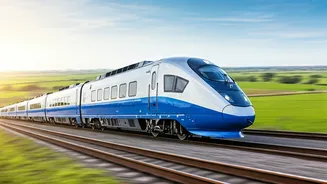
India is embarking on a significant expansion of its high-speed rail network, with the proposed Delhi-Varanasi bullet train corridor being a cornerstone
of this ambitious plan. This project, announced during the Union Budget 2026-27, aims to drastically reduce journey times between major urban centers in North India, including a pivotal link through Lucknow. This initiative is part of a larger government strategy to establish multiple bullet train corridors nationwide, mirroring the ongoing rapid progress of the country's inaugural high-speed rail project connecting Mumbai and Ahmedabad. The introduction of this new corridor is poised to redefine inter-city travel, making journeys that currently take many hours a mere fraction of that time, thereby fostering greater economic integration and accessibility across the region.
Drastic Journey Time Cuts
The envisioned high-speed rail network is set to dramatically shorten travel durations on key routes, according to Railway Minister Ashwini Vaishnaw. Specifically, the journey between Delhi and Lucknow is projected to be reduced to approximately two hours once the bullet train service becomes operational. This is a substantial decrease compared to current fastest options like the Vande Bharat Express and Shatabdi Express, which currently take around 6 hours and 25 minutes, and 6 hours and 50 minutes, respectively. Furthermore, the minister indicated that the Delhi to Varanasi route would also see a significant reduction, potentially taking around 3 hours and 50 minutes. These drastic time savings are expected to make high-speed rail a highly attractive alternative for passengers.
Economic Integration Catalyst
Beyond just travel time, the high-speed rail corridor is anticipated to act as a major catalyst for economic growth and integration across North India. Minister Ashwini Vaishnaw has highlighted that the network could effectively merge regions such as Varanasi-Patna and Varanasi-Lucknow into a unified economic zone by facilitating quicker and more fluid movement of people and goods. This improved connectivity is expected to bolster trade, enhance business mobility, and foster stronger regional ties, while also improving access between burgeoning urban centers and industrial hubs. The minister suggested that the convenience and speed of these future bullet train routes might even make them more appealing than air travel for many shorter journeys.
Future Corridors and Competition
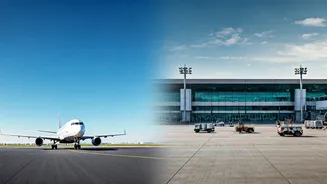
The vision for high-speed rail extends beyond the Delhi-Varanasi corridor, with plans for several other significant routes. For instance, the proposed Mumbai-Pune bullet train is expected to cut travel time to a mere 28 minutes. Similarly, journeys like Pune to Hyderabad could take about 1 hour and 55 minutes, and Hyderabad to Bengaluru might be completed in close to two hours. These dramatic reductions in travel time lead to the expectation that high-speed rail could significantly reduce the demand for short-haul flights, potentially becoming the dominant mode of passenger transport on many of these routes due to its superior speed and convenience.
Accelerating High-Speed Rail
The Indian government is actively pushing forward with its high-speed rail ambitions, entrusting the National High-Speed Rail Corporation Limited (NHSRCL) with expediting the planning and execution of seven corridors announced in Budget 2026-27. The Railway Board has directed NHSRCL to revise existing Detailed Project Reports (DPRs) for these corridors, signaling a concerted effort to accelerate their implementation. This strategic expansion of the high-speed rail network is viewed as a critical component of India's long-term strategy for modernizing its transportation infrastructure, with the primary goals of minimizing travel times and enhancing inter-city mobility. As the Mumbai-Ahmedabad corridor progresses and new projects gain momentum, India is clearly accelerating its commitment to developing world-class high-speed rail.