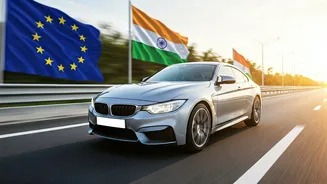

Trade Agreement Overview
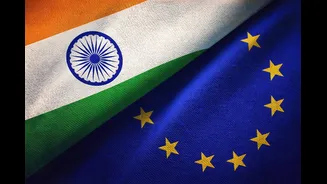
The India-EU Free Trade Agreement (FTA) signifies a major step forward in strengthening the economic ties between India and the European Union. This comprehensive
agreement addresses various facets of trade, investment, security, and strategic collaboration. The primary goal is to foster deeper economic integration by eliminating trade barriers, boosting market access, and facilitating increased investment flows. Negotiations have centered on crucial areas such as tariffs, non-tariff barriers, intellectual property rights, and sustainable development. The deal intends to improve India's access to the EU market, which is a major trading partner and investment source, simultaneously offering the EU better access to the Indian market, which is experiencing rapid growth. This partnership has the potential to generate significant opportunities for businesses on both sides and boost overall economic prosperity, fostering cooperation on global challenges like climate change and digital transformation.
Benefits for India
For India, the India-EU FTA holds considerable promise. It offers the possibility of expanding its exports to the EU market. The reduction or elimination of tariffs and other trade obstacles could significantly improve the competitiveness of Indian goods and services. Increased market access is especially beneficial for sectors like textiles, pharmaceuticals, and agricultural products. This agreement could stimulate foreign investment, leading to job creation, technology transfer, and economic growth. A closer partnership with the EU can also help India in diversifying its trade relationships, reducing dependence on specific markets, and improving its position in international trade. Moreover, the FTA can enhance India's participation in global value chains, promote sustainable development practices, and strengthen cooperation on strategic issues such as climate change and renewable energy. The agreement is also expected to foster stronger relationships and enhance the country’s economic resilience.
Benefits for the EU
The EU also stands to gain substantially from the India-EU FTA. The agreement offers EU businesses greater access to the rapidly growing Indian market. Removing or reducing trade restrictions can significantly enhance the competitiveness of European goods, services, and investments in India. This could translate to increased export opportunities for sectors like machinery, automobiles, and financial services. The FTA could facilitate the entry of European companies into the Indian market, fostering competition and innovation, ultimately benefiting consumers. A closer economic relationship with India can help the EU diversify its supply chains, reduce dependence on specific markets, and bolster its global economic influence. Furthermore, the agreement presents opportunities for collaboration on global challenges, like climate change, digital transformation, and sustainable development. The deal serves to strengthen the EU's geopolitical standing and promote economic prosperity.
Global Implications
The India-EU FTA has far-reaching implications that extend beyond the immediate benefits for the two partners. It serves as a strong signal of commitment to open and rules-based trade in an environment where protectionist pressures are on the rise. This agreement could encourage other countries to engage in trade liberalization. The deal has the potential to reshape global trade dynamics by creating a powerful economic bloc. It could also influence negotiations on multilateral trade issues, such as those related to the World Trade Organization (WTO). A successful India-EU FTA can serve as a model for other trade agreements, paving the way for further economic integration. It also has the potential to promote global cooperation on shared challenges, such as climate change, digital transformation, and sustainable development, supporting the establishment of a more inclusive and prosperous global economy. The agreement sends a clear message of promoting multilateralism and fostering international collaboration.