

New Cafe Racer Patent
TVS Motor Company has officially filed a design patent in India for a motorcycle that adopts a classic cafe racer aesthetic. This new design appears to be
a derivative of their already established Ronin model, utilizing the same 225cc engine platform. The patent suggests TVS is actively exploring options to introduce a more performance-oriented and stylish version of its current roadster, hinting at a strategic move into a niche within the retro-sport segment. This development is particularly significant as it follows closely on the heels of the Ronin Factory Custom cafe racer concept, which was publicly displayed in late 2024. The swiftness of the patent filing indicates that the design is considered production-ready, moving beyond purely conceptual stages. While there's no official word on a market launch, this patent filing clearly signals TVS' intent to protect and potentially commercialize this specific design language. It underscores a commitment to expanding their portfolio with models that cater to enthusiasts seeking a blend of retro charm and modern engineering, potentially offering a factory-built alternative to custom modifications.
Distinctive Cafe Racer Styling
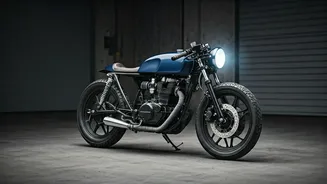
The newly patented cafe racer design presents a significant departure from the Ronin's contemporary roadster profile. Key visual alterations include the adoption of clip-on handlebars, which promise a more aggressive and forward-leaning riding posture, a characteristic trait of cafe racers. The front end also appears to feature a tighter rake, contributing to a sportier stance. Furthermore, the placement of rear-set footpegs reinforces the commitment to a rider-centric, performance-oriented setup. The aesthetic is further enhanced by a minimalist bikini fairing that encircles the headlamp, adding a touch of classic sportbike flair. A prominent single-seat design, complemented by a sculpted rear cowl, solidifies the traditional cafe racer silhouette. The rear end also boasts unique styling, with a sharply integrated fender and tail-light assembly that significantly distinguishes it from the production Ronin. Even the exhaust end-can has been reshaped and finished differently, contributing to a sportier overall appearance without necessitating major underlying mechanical changes, focusing primarily on visual appeal and rider ergonomics.
Engine and Hardware Carryover
Beneath its distinctive retro styling, the patented cafe racer is expected to share its core mechanical components with the existing TVS Ronin. This means it will likely be powered by the same 225cc, oil-cooled, single-cylinder engine. In its current configuration on the Ronin, this powerplant produces 20.4 horsepower and 19.9 Nm of torque, managed through a 5-speed transmission. These performance figures are anticipated to remain consistent for the cafe racer variant, suggesting that the focus of this model is predominantly on its updated design and riding dynamics rather than an increase in outright power. It is also highly probable that the chassis, suspension system, and braking hardware will be carried over from the Ronin, as these elements are fundamental to the motorcycle's structure and handling. Therefore, the primary innovation for this new model lies in its aesthetic transformation and the ergonomic adjustments aimed at providing a more engaging riding experience, rather than in significant performance enhancements. This approach allows for a quicker development cycle and leverages existing, proven components.
Market Prospects and Potential
TVS has yet to officially confirm whether this Ronin-based cafe racer will make its way to production showrooms. The presence of a design patent, while indicative of serious intent, does not automatically guarantee a market launch. However, if TVS decides to proceed with production, this motorcycle could carve out a unique position in the 200-250cc segment. It would represent a factory-built cafe racer, offering consumers a ready-made option with a distinct style, bypassing the need for aftermarket modifications. This could appeal to a segment of riders who appreciate the classic cafe racer look but prefer the reliability and warranty of a manufacturer-produced vehicle. Such a model would provide a compelling alternative for enthusiasts looking for a retro-styled motorcycle that is both aesthetically appealing and practical for everyday use, potentially revitalizing interest in this classic motorcycle archetype within a modern context and broadening TVS' appeal across different rider preferences.