





Barringer's Desert Jewel
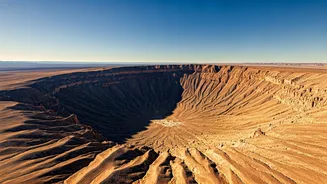
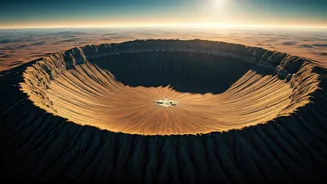
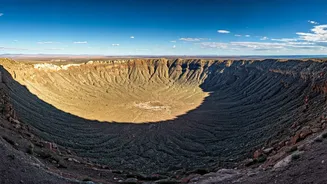
Venture to the Arizona desert to witness the Barringer Crater, an exceptionally preserved testament to a cosmic collision that occurred approximately 50,000
years ago. This vast impact site offers visitors a tangible connection to geological history, allowing them to traverse its rim and grasp its immense scale. Complementing the natural spectacle is a visitor center equipped with engaging exhibits on space phenomena and genuine fragments of the meteorite. It's an ideal destination for anyone seeking a close-up, educational experience of what an impact crater truly is.
India's Salty Surprise
Journey to the Buldhana district in Maharashtra, India, to find the Lonar Crater Lake, a geological anomaly formed in rare volcanic rock around 50,000 years ago. What sets this site apart is its distinct water composition, which is simultaneously saline and alkaline, fostering a truly unique aquatic ecosystem. The surrounding area is enhanced by the presence of ancient temples and verdant landscapes, offering a serene yet scientifically captivating environment for exploration and discovery.
South Africa's Ancient Giant
In South Africa lies the Vredefort Crater, recognized as the largest impact structure on our planet. Dating back over 2 billion years, its original crater form has been significantly reshaped by natural erosion. Nevertheless, the sheer immensity of the region remains remarkable. Its profound geological significance has earned it a coveted spot on the UNESCO World Heritage list. Visitors can explore the transformed landscape and examine rock strata that narrate the story of this incredibly ancient impact event.
Canada's Pristine Bowl
Experience the remote and pristine beauty of the Pingualuit Crater in Canada, distinguished by its strikingly perfect circular shape. The deep, crystal-clear lake nestled within the crater offers a serene focal point. Although reaching this isolated gem requires dedicated effort, the breathtaking natural scenery is an undeniable reward. The tranquility of the site provides a profound sense of the immense power unleashed during the meteor's impact.
Australia's Well-Preserved Impact
Explore the Wolfe Creek Crater in Australia, a site that remarkably retains its distinct impact shape even today. Formed approximately 120,000 years ago, its definition is still clearly visible. Visitors have the opportunity to walk along its rim or venture into its depths. Importantly, this location holds significant cultural value for local Aboriginal communities, who possess unique oral traditions concerning its formation, blending natural history with rich cultural heritage.