







Eastern India's New Lifeline
Bihar is poised to embrace a new era of high-speed transportation, as confirmed by recent announcements regarding the Union Budget 2026-27. A crucial bullet
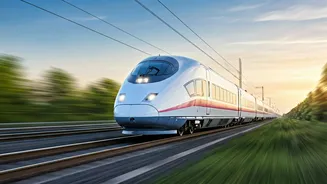
train corridor is planned to traverse the state, linking the historic city of Varanasi in Uttar Pradesh with Siliguri in West Bengal. This ambitious undertaking, with a significant passage through Bihar's capital, Patna, is designed to fundamentally alter the travel landscape of Eastern India. Railway Minister Ashwini Vaishnaw has highlighted this corridor as a pivotal development, emphasizing its potential to dramatically slash journey durations and enhance connectivity across this vital region. The project signifies a substantial investment in modernizing infrastructure and integrating Bihar more seamlessly into the nation's high-speed rail network, promising improved accessibility and economic opportunities.
Transformative Travel Times
The envisioned Varanasi-Siliguri High-Speed Rail Corridor promises to revolutionize inter-state travel by drastically reducing transit times. Currently, the journey between Varanasi and Siliguri can take anywhere from 14 to 18 hours, a significant undertaking for passengers. However, with the advent of this bullet train, this duration is expected to be compressed to less than a mere three hours. This remarkable reduction is achievable due to the trains' operational speeds, which will range between an impressive 300 to 350 kilometers per hour. This leap in speed will not only benefit individual travelers seeking efficient transit but will also have profound implications for logistics and regional economic activity, making previously distant locations readily accessible for business and leisure.
Economic Catalyst for Bihar
Beyond the immediate benefits of faster travel, the Varanasi-Siliguri bullet train corridor is anticipated to serve as a powerful engine for economic growth throughout Bihar and the surrounding regions. The enhanced connectivity and reduced travel times will stimulate various sectors, including trade, business, and tourism. Improved accessibility will make it easier for people to engage in commercial activities, potentially leading to increased investment and job creation. Furthermore, the corridor will bolster access to essential services such as education and healthcare, allowing residents to reach specialized institutions more readily. While the detailed route and station locations are still under development, the inclusion of this project in the national agenda underscores its strategic importance in modernizing Bihar's transportation infrastructure and unlocking its economic potential.