






Defining Sacred Mountains
Sacred mountains stand as symbols of profound spiritual importance within various cultures and faiths, representing connection points between the earthly
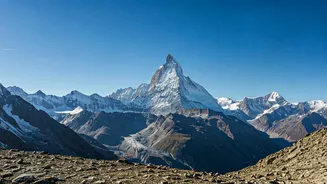
and the divine. They are often revered as the dwelling places of gods, ancestors, or enlightened beings. Their peaks serve as focal points for religious practices, from rituals and meditation to pilgrimages, where individuals seek enlightenment, blessings, and closer proximity to the sacred. The mountains' imposing presence and often challenging terrain are seen as tests of faith and dedication, enhancing the significance of the spiritual journey. Additionally, sacred mountains frequently feature prominently in mythology and folklore, shaping the cultural identities of the communities that surround them. The awe-inspiring beauty and the symbolic weight of these mountains continuously draw seekers from around the world to partake in the experience and deepen their spirituality.
Mount Kailash's Mystique
Mount Kailash, located in Tibet, is arguably one of the most venerated mountains on Earth. It holds significant importance in Hinduism, Buddhism, Jainism, and Bön. Considered the abode of Lord Shiva in Hinduism, the mountain is a prime destination for devout followers. Pilgrims undertake the arduous 'kora,' a circumambulation of the mountain that is believed to cleanse sins and bring spiritual merit. The mountain's isolation and extreme conditions add to its mystical aura, and it has remained unclimbed due to its spiritual significance. For Buddhists, Kailash is associated with Demchog and represents the center of the cosmos. Jains regard it as the site where their first Tirthankara attained enlightenment. The pristine beauty of Mount Kailash is preserved by its status as a sacred site, allowing it to maintain its untouched magnificence.
Mount Fuji's Reverence
In Japan, Mount Fuji is much more than just a mountain; it's a national icon and a deeply spiritual place. Revered in Shinto, the indigenous religion of Japan, Fuji is considered a sacred mountain, and many Shinto shrines are located at its base and along the trails. The mountain's symmetrical cone shape and breathtaking views have long captured the hearts of artists and poets, as it inspires themes of immortality and natural beauty. For centuries, pilgrims have climbed to the summit, not merely to reach the top, but also to participate in rituals and to experience a spiritual renewal. The iconic image of Mount Fuji is recognized worldwide and serves as a constant reminder of the spiritual, artistic, and natural richness of Japan. Climbing Mount Fuji, especially at sunrise, is a unique experience.
Other Significant Peaks
Several other mountains also hold great importance worldwide. Mount Olympus, in Greece, is famed in Greek mythology as the home of the gods, particularly Zeus. The ancient Greeks believed that the gods dwelled on its summit, which made it a hub for religious reverence and myth-making. In Egypt, Mount Sinai has deep significance in Judaism, Christianity, and Islam, as it is the place where, according to religious texts, Moses received the Ten Commandments. Adam’s Peak (Sri Pada) in Sri Lanka, is another important mountain, celebrated by Buddhists, Hindus, Muslims, and Christians alike. These mountains, each with their own unique story and spiritual practices, symbolize the universal human quest for meaning and connection to something greater than themselves, demonstrating the diversity and complexity of human belief systems.