





Exterior Styling Enhancements
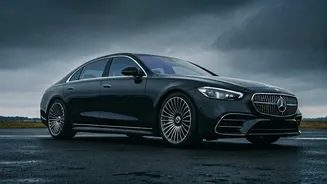
The updated S-Class boasts a subtly refined exterior, with the most prominent change being a grille that's 20% larger than its predecessor, now adorned
with small chrome stars within its slats and an illuminated frame for a more commanding presence. The iconic three-pointed star hood ornament also receives illumination. Its headlights have been enlarged and now incorporate a pair of three-pointed star daytime running lights (DRLs) in each unit, utilizing the brand's latest micro-LED Digital Light technology. This advanced lighting system not only produces 40% more illumination but is also lighter and more energy-efficient. The front bumper has undergone a redesign, contributing to a sportier aesthetic. From a side profile, the modifications are less apparent, primarily limited to newly designed wheels, including intricate 50-spoke rims crafted through a novel high-pressure casting process. Additionally, several new standard paint shades have been introduced, many drawing inspiration from the exclusive Manufaktur range, offering customers more personalization options. The vehicle is also equipped with an enhanced suite of sensors, comprising five radars, ten cameras, and twelve ultrasonic sensors, all working in synergy to support the updated Advanced Driver-Assistance Systems (ADAS). At the rear, the most noticeable alteration is the adoption of slimmer tail-lamps, now featuring distinctive three-pointed star LED motifs, adding a signature touch to the vehicle's rear design.
Hybrid and Petrol Powertrains Detailed
Mercedes-Benz is introducing a plug-in hybrid powertrain option to the S-Class lineup for the Indian market, a first for the flagship sedan in the country. The S 450e variant will feature EQ Hybrid Technology, combining a 3.0-liter turbo-petrol inline-six engine with an electric motor to deliver a potent combined output of 435 horsepower and 680 Nm of torque. This variant is equipped with a 22 kWh battery, capable of providing up to 100 km of pure-electric range under ideal conditions, and can accelerate from 0 to 100 km/h in just 5.7 seconds, according to the manufacturer. Due to the battery pack, this model is rear-wheel drive. For those preferring a conventional petrol engine, the S 450 variant utilizes the same 3.0-liter 'M256 Evo' turbo-petrol engine but without the plug-in hybrid system. Instead, it benefits from a 48V mild-hybrid system that offers a temporary surge of extra power and torque during hard acceleration. While its peak output figures of 404 horsepower and 500 Nm are lower than the hybrid variant's, it incorporates Mercedes-Benz's 4Matic all-wheel-drive system and achieves a remarkable 0-100 km/h sprint time of 4.9 seconds, nearly a second faster than the hybrid. The S 350d diesel variant is powered by a 3-liter six-cylinder engine producing 330 horsepower and 650 Nm of torque, also sending power to all four wheels, similar to the S 450.
Revolutionary Interior Experience
The interior of the updated S-Class marks a significant departure from its predecessor, replacing the previous flowing dashboard with wood trim and a vertical touchscreen with Mercedes-Benz's advanced Superscreen setup. This new configuration features two 12.3-inch displays for the driver and front passenger, flanking a striking 14.4-inch central touchscreen that serves as the command center for most of the car's functions. At its core is the latest MB.OS system, representing the newest generation of the brand's MBUX digital architecture. Mercedes-Benz describes this system as acting like a central computer for the vehicle, managing everything from the lighting and camera systems to the powertrain and suspension dynamics. The system integrates AI-driven features, including a sophisticated digital assistant, along with Google Maps-based navigation and Vehicle-to-Everything (V2X) communication capabilities. The S-Class is now a software-defined vehicle (SDV), enabling it to receive over-the-air updates, ensuring it stays current with the latest advancements. Echoing the E-Class, all air vents are now electronically controlled and can be digitally adjusted, though manual adjustment remains possible. The reduction in physical buttons, a trend already established in the current S-Class, continues with the facelift; only a slim row of capacitive shortcut keys is retained below the main screen. The fingerprint scanner has been eliminated, with facial recognition, utilizing a dashboard camera, now handling user identification. This camera is also capable of video calls, capturing selfies, and monitoring the cabin when the car is parked. To enhance usability while driving, scroll wheels and toggle switches have been added to the steering wheel. Rear passengers continue to be accommodated with two 13.1-inch entertainment touchscreens embedded behind the front seats. However, the rear controller tablet has been replaced by two smaller touch controllers, resembling smartphone devices. The S-Class maintains its standard adaptive air suspension, with active self-leveling suspension still available as an option. Rear-wheel steering is also offered, with a 4.5-degree setup now standard and a more aggressive 10-degree version available as an optional upgrade.
India Launch and Pricing
The highly anticipated 2026 Mercedes-Benz S-Class facelift is set to make its debut in India on June 15, marking the first time the flagship sedan will be available with a plug-in hybrid powertrain in the country. While a petrol engine option is expected to follow later, clarity on whether a diesel engine variant will continue to be offered remains pending. Industry estimates suggest the updated S-Class will be priced between Rs 2 crore and Rs 2.4 crore (ex-showroom), with the plug-in hybrid variant anticipated to be the most expensive in the range. To potentially manage the pricing of this new variant and keep it competitive within the broader S-Class range, Mercedes-Benz may consider local assembly at its Chakan plant in Maharashtra. The global reveal of the facelifted S-Class occurred towards the end of January, with its India launch scheduled just over four months later, indicating a swift market introduction for the technologically advanced sedan.