







Visibility is Key
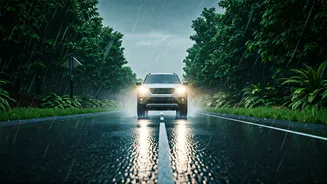
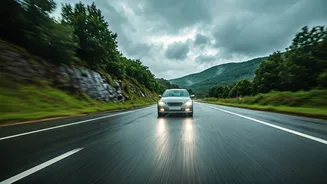
During monsoon downpours, visibility plummets, making it challenging for drivers to spot each other. To combat this, always ensure your headlights are
switched on, even during daylight hours. This simple act significantly enhances your car's detectability by other road users, thereby contributing to overall road safety. Don't underestimate the power of being seen; it’s a fundamental aspect of accident prevention when the weather turns grim.
Tyres & Brakes Check
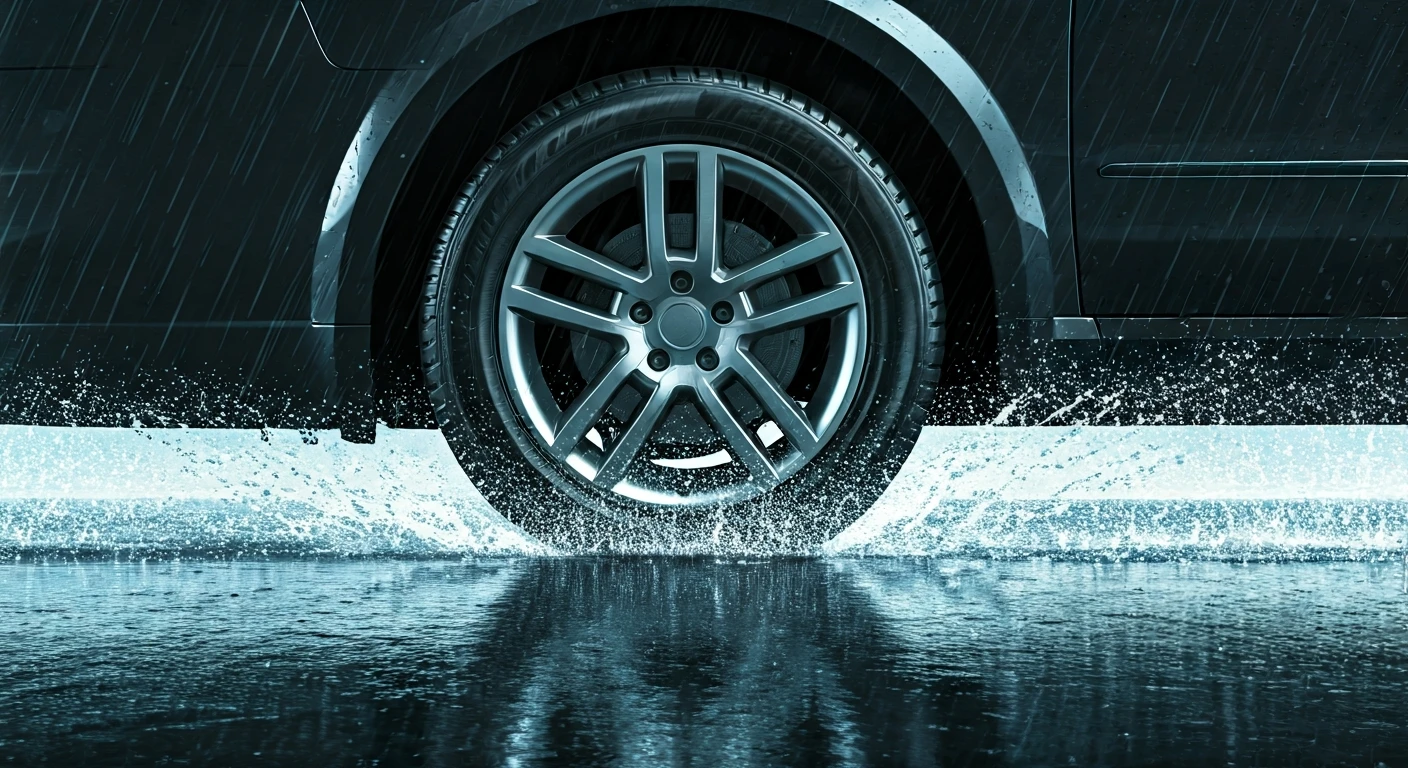
Before embarking on any road trip during the rainy season, a thorough inspection of your vehicle's tyres and brakes is paramount. Superior tyre tread offers essential grip on slick surfaces, dramatically reducing the likelihood of skidding. Equally vital are well-functioning brakes, which guarantee your ability to stop safely and effectively in unpredictable traffic situations or on unexpectedly slippery patches of road. These components are your first line of defense against monsoon hazards.
Emergency Preparedness
For any car journey during the monsoon, stocking your vehicle with essential emergency supplies is non-negotiable. Pack items like a reliable flashlight for visibility in low-light conditions, a comprehensive first-aid kit to manage minor injuries, a portable phone charger to stay connected, basic tools for minor repairs, and sufficient drinking water. Having these essentials readily accessible can be a lifesaver if you encounter unexpected problems or breakdowns along your route.
Slow & Steady Pace
Wet road surfaces significantly compromise traction, increasing the risk of losing control. Therefore, it is crucial to drive at a reduced speed and maintain a consistent pace throughout your journey. Avoid abrupt acceleration or sudden, hard braking, as these actions can easily lead to your car skidding or becoming unstable. A measured approach to driving is essential for navigating the challenges of slick roads.
Steer Clear of Floods
During periods of heavy rainfall, it is strongly advisable to avoid driving through flooded or waterlogged areas whenever possible. Deep water poses a significant threat to your vehicle, potentially causing extensive damage to the engine and crucial electrical systems. Furthermore, submerged roads can conceal dangerous potholes or uneven surfaces, which could lead to accidents and compromise your safety and that of your passengers.
Clear Vision, Clear Path
A critical pre-journey check involves ensuring your windshield wipers are in optimal working condition. These are indispensable for clearing away rainwater, allowing you to maintain a clear view of the road ahead. Complementing the wipers, the defogger function is equally important for removing condensation from the inside of the windshield, ensuring unobstructed vision even when the temperature and humidity levels fluctuate.
Safe Following Distance
When driving in rainy conditions, it’s imperative to increase the distance between your car and the vehicle in front of you beyond the usual margin. The braking distance on wet roads is considerably longer than on dry surfaces. Maintaining a generous safety gap provides you with ample reaction time and space to stop safely should the vehicle ahead suddenly decelerate or encounter an obstruction.