



The Flip-Flop Myth Debunked
A prevalent misconception has long circulated among Indian drivers: the idea that wearing flip-flops or slippers while operating a vehicle could lead to
a traffic violation, or 'challan'. This notion has persisted for years, fueled by anecdotal accounts and varying interpretations from some traffic personnel, despite many individuals considering such footwear to be perfectly acceptable for casual use. This ongoing discussion underscores a wider issue of public awareness regarding specific traffic regulations and the potential consequences of misunderstanding them. However, the Motor Vehicles Act in India does not contain any specific provisions that prohibit drivers from wearing slippers or any other type of open footwear. Therefore, there is no legal basis for issuing a challan solely on the grounds of driving in flip-flops. The confusion has been further amplified by social media, where such claims often gain traction without factual backing. Ultimately, the law remains silent on the specific type of footwear worn by a driver, as long as it does not impede their ability to operate the vehicle safely.
Legal Clarity and Official Stance
To address the widespread confusion regarding driving in slippers, an official clarification was issued that effectively put an end to the debate. In September 2019, the office of Nitin Gadkari, the Union Minister for Road Transport and Highways, utilized an X (formerly Twitter) post to explicitly state that there is no existing rule or regulation within the Indian legal framework that penalizes individuals for driving while wearing slippers. This statement from a high-ranking authority served to confirm that driving in such footwear is indeed permissible from a legal standpoint. This official pronouncement aimed to provide definitive clarity to the public, dispelling the persistent rumors that had caused uncertainty among many motorists. The updated regulations, as confirmed by this official communication, leave no room for ambiguity: driving in slippers is not a punishable offense. This move was crucial in ensuring that drivers are not unnecessarily burdened by unfounded fears or misinterpretations of traffic laws, allowing them to focus on more critical aspects of road safety.
Safety First: The Case for Proper Shoes
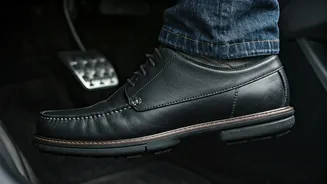
While the law may not prohibit driving in flip-flops, experts and safety advocates strongly recommend against it due to significant safety concerns. Wearing appropriate footwear, such as closed-toe shoes, offers superior grip and stability on the vehicle's pedals compared to the often smooth and unsecured surfaces of slippers. This enhanced grip is crucial for maintaining consistent control over the brake and accelerator, especially during sudden maneuvers or emergencies where precise pedal application is vital. Slippers, due to their loose fit and tendency to slide, can easily slip off the foot, potentially getting caught under the pedals or failing to depress them with sufficient force, leading to dangerous delays in response times. Furthermore, proper shoes provide a more stable platform, allowing for consistent pressure to be applied, thereby increasing accuracy and reducing the risk of accidental acceleration or braking. In essence, sturdy footwear significantly contributes to a driver's ability to react effectively to unexpected road conditions and maintain overall vehicle control with greater confidence and precision.
Choosing Wisely for the Road
The choice of footwear directly impacts a driver's confidence and ability to manage the vehicle effectively. Opting for sturdy, well-fitting shoes can minimize potential distractions and enhance overall driving safety. Unlike flip-flops or sandals, which can shift or even come off during operation, shoes provide a secure connection between the foot and the pedals. This secure connection ensures that the driver can apply the correct amount of pressure precisely when needed, whether it's for gentle acceleration or firm braking. Such consistency is paramount in maintaining control, particularly in challenging driving scenarios that demand quick thinking and precise actions. While the legal aspect is settled – driving in slippers is not against the law – the practical implications for safety are undeniable. Therefore, even though it's permissible, choosing more secure footwear remains the demonstrably safer option for responsible driving.