





A New Era Dawns
The much-anticipated 'Missing Link' of the Mumbai-Pune Expressway is officially slated for inauguration on May 1st, coinciding with Maharashtra Day. This
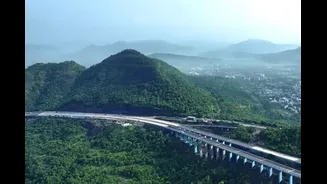
transformative 13.3-kilometer addition promises to revolutionize travel between India's major metropolitan hubs. Following extensive construction, navigating challenges posed by the Sahyadri terrain, heavy monsoons, and global supply chain disruptions, this project is poised to become a symbol of modern engineering prowess. The new alignment aims to completely bypass the perilous and accident-prone Bhor Ghat and Khandala sections, known for their sharp turns and steep gradients. Once operational, it is projected to cut down travel duration by a substantial 20 to 30 minutes, with even greater savings expected during peak hours and holiday seasons. Developed by the Maharashtra State Road Development Corporation (MSRDC) at an approximate cost of Rs 6,700 crore, this project has been in the making since 2019 and is now nearing completion with only minor finishing touches remaining.
Tunneling Through Limits
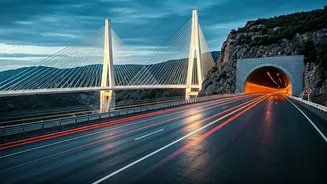
At the heart of the 'Missing Link' project lie its extraordinary twin eight-lane tunnels, a true testament to advanced tunneling technology. One of these tunnels stretches an impressive 8.92 kilometers, positioning it among the longest road tunnels across Asia. The second tunnel, measuring approximately 1.75 kilometers, contributes to this impressive feat. What sets these tunnels apart, however, is their remarkable width, ranging from 23.5 to 23.75 meters, potentially earning them a place in the Guinness World Records as some of the widest road tunnels globally. The construction presented significant engineering hurdles, particularly due to the route passing beneath the Lonavala lake area, demanding meticulous planning and execution in complex geological conditions. Officials have expressed confidence in the quality and scale of this infrastructure, highlighting its potential to redefine road travel safety and efficiency.
Tiger Valley Bridge Marvel
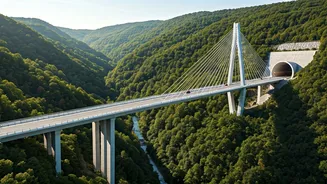
Dominating the skyline of the 'Missing Link' is the spectacular 650-meter cable-stayed bridge spanning Tiger Valley, an integral part of a larger structure that also includes an 850-meter viaduct. The bridge's pylons soar to an impressive height of 182 meters, marking it as one of India's tallest road bridges. Its construction utilized cutting-edge techniques such as jump formwork, overcoming the formidable challenges presented by narrow ridges, intense winds, and dense fog endemic to the Sahyadri mountain range. Engineers from Afcons International have lauded the successful completion of this segment as an engineering marvel, achieved through immense dedication and innovative problem-solving under extremely demanding circumstances. This bridge not only serves as a critical connector but also stands as an architectural icon.
Congestion Relief Ahead
A significant outcome anticipated from the operationalization of the 'Missing Link' is the substantial alleviation of traffic congestion. Authorities are projecting a reduction of up to 70% on the existing Khandala ghat stretch, a notoriously bottlenecked section on one of India's most heavily traversed inter-city routes. The Mumbai-Pune Expressway, already a 95 km access-controlled highway, handles immense daily traffic volumes. The addition of this new segment is expected to foster considerably quicker, smoother, and more predictable journeys for all commuters. This improved traffic flow will not only benefit daily travelers but also enhance the overall efficiency of goods transportation, contributing to economic gains.
No Additional Tolls
In a welcome move for commuters, the enhanced Mumbai-Pune Expressway will not necessitate any increase in toll charges. Despite the substantial investment and scale of the 'Missing Link' project, officials have confirmed that the existing toll structure at plazas like Khalapur and Talegaon will remain unchanged. This means travelers will enjoy the benefits of reduced travel times and significantly eased congestion without incurring any extra financial burden. The decision to maintain the current toll rates underscores the project's commitment to providing tangible benefits to the public and encouraging greater use of this improved infrastructure.
Phased Access Rollout
To ensure a smooth and safe transition, the 'Missing Link' will be opened in phases. Initially, access will be restricted to light motor vehicles and buses. Heavy goods vehicles and those transporting hazardous materials will continue to utilize the older ghat section for an initial period, estimated to be around six months. This phased approach is a strategic measure designed to allow authorities to meticulously study traffic patterns and monitor operational safety before permitting broader access. The gradual introduction of traffic aims to identify and address any potential issues, ensuring the long-term efficiency and security of the new corridor for all users.
Boosting Tourism and Economy
Beyond its primary function of easing traffic, the 'Missing Link' project is anticipated to serve as a catalyst for regional development, particularly in tourism. Improved connectivity will make popular tourist destinations like Lohagad Fort, Visapur Fort, and the Karla Caves more accessible to visitors traveling from Mumbai and Pune. This enhanced accessibility is expected to provide a significant boost to the local tourism industry. Furthermore, the strengthened transportation links will foster greater economic activity and connectivity between Mumbai, Pune, and their surrounding regions, solidifying the corridor's importance as a vital economic artery for Maharashtra.