



Autonomous Mobility's Ascendancy
During the Samson Smart Mobility Summit 2026, held in Tel Aviv, Israel, Elon Musk painted a vivid picture of the next ten years, emphasizing a dramatic
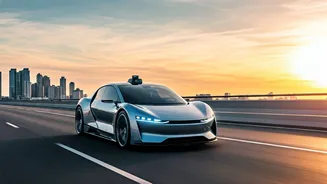
surge in autonomous systems across various facets of life. His most striking prediction focused on transportation, where he asserted that artificial intelligence-powered vehicles are poised for widespread real-world integration. Musk highlighted the continuous advancement of AI-driven vision systems and cameras in autonomous driving technology, noting a reduced reliance on radar. He confidently stated that by 2036, an astounding 90 percent of all travel distance could be covered by autonomous systems. Consequently, manual driving is expected to transition from a daily necessity to more of a specialized hobby for enthusiasts. Furthermore, Musk posited that autonomous systems would achieve a level of safety significantly surpassing human drivers, projecting that current technology could become 'at least an order of magnitude safer' due to the inherent elimination of human errors, distractions, and fatigue.
Robotics and Neural Interface Innovations
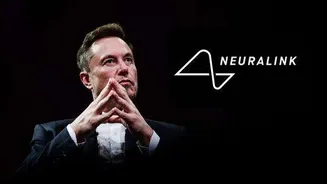
Beyond the realm of self-driving cars, Musk broadened his outlook to encompass the integration of humanoid robots into our everyday existence. He envisioned a future where these intelligent machines would act as indispensable personal assistants, adept at managing repetitive and physically demanding tasks. Musk speculated that the global population of intelligent humanoid robots might eventually outnumber humans, a development he believes could usher in an era of unparalleled productivity and economic abundance, fundamentally reshaping industries like manufacturing and services. Shifting focus to human-computer interaction, Musk detailed the progress of Neuralink, a venture focused on brain-computer interfaces. He described the technology's potential to revolutionize medicine and augment human capabilities, particularly for individuals with severe spinal injuries, by enabling direct brain-to-digital system communication to restore mobility and communication. Future Neuralink implants are also being developed to restore vision for the blind, even those without functional optic nerves, with the long-term possibility of achieving 'superhuman' visual abilities.
Smart Cities and Economic Shifts
The overarching theme of Musk's discourse revolved around the evolution of smart mobility and AI-integrated societies. He projected that autonomous transport, coupled with AI-driven infrastructure, would become the dominant force in urban environments, profoundly altering urban functionality and human interaction with cities. This automated economy, powered by intelligent machines, could potentially lead to widespread prosperity and a significant elevation in living standards. However, Musk also acknowledged the profound philosophical questions this future might raise, particularly concerning human purpose and meaning in a world where machines may excel across numerous tasks. He also lauded Israel's vibrant innovation ecosystem, recognizing it as a leading global technology hub relative to its population size. Musk specifically commended Israel's contributions to artificial intelligence, mobility, and engineering, suggesting that collaborative efforts between Tesla and Israeli innovators could accelerate advancements in smart technology and transportation. He consistently underscored the critical importance of ongoing experimentation and innovation as the defining characteristic of the upcoming decade across mobility, healthcare, robotics, and artificial intelligence.