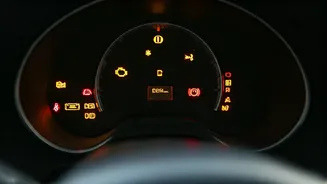








Engine Check Light
The engine check light, often shaped like an engine, is a universal symbol. If this light illuminates, it signals a problem with your car's engine system.
Several issues can trigger this light, ranging from a loose gas cap to more severe problems such as a misfiring engine or issues with the catalytic converter. Ignoring this light can lead to reduced fuel efficiency and potential damage. It's recommended that you get the car checked by a mechanic as soon as possible, to diagnose the specific cause by using an OBD-II scanner. The mechanic will check the diagnostic trouble codes (DTCs), which can provide valuable clues about the problem. Addressing the issue early often prevents more serious and costly repairs down the line.
Oil Pressure Warning
The oil pressure warning light looks like an oil can. This light indicates low oil pressure, a serious issue that can rapidly cause engine damage. Low oil pressure means the engine isn’t receiving the proper lubrication, increasing friction and heat within the engine's moving parts. If this light appears, safely pull over immediately and switch off the engine. The first thing you should do is to check the oil level using the dipstick. If the oil is low, add the correct type of oil. Even if the oil level seems normal, the warning light can indicate a failing oil pump or a leak, which requires professional inspection. Continuing to drive with low oil pressure can result in catastrophic engine failure, requiring costly engine replacement.
Battery Warning Light
The battery warning light, usually shaped like a battery, alerts you to issues with the charging system. It means the battery isn't being charged correctly by the car's alternator. This issue can stem from a defective alternator, a loose or corroded battery connection, or a faulty serpentine belt. If this light illuminates, the battery’s power will eventually drain, leaving your car stranded. While it's possible to drive a short distance, it's best to minimize electrical usage by turning off the air conditioning and radio. The car needs to be inspected by a mechanic, who can test the charging system components to determine the source of the problem. Ignoring this light can lead to a dead battery and potential damage to the electrical system.
Brake System Warning
The brake system warning light can come in two forms: a word 'BRAKE' or an exclamation mark inside a circle. This light can indicate several brake-related issues. If the light is on, it could mean the parking brake is engaged, but if the parking brake is disengaged, it can also mean there’s a problem with the brake fluid level or the braking system itself. Low brake fluid levels can reduce braking effectiveness, and other malfunctions can indicate worn brake pads or rotors. If the brake light is illuminated, you should stop the car safely to check the brake fluid level. If the level is low, consult a professional to identify the source of the leak or other system issues. Never ignore this light, as it is crucial for your safety.
ABS Warning Light
The ABS (Anti-lock Braking System) warning light often displays the letters 'ABS'. It indicates a malfunction within the anti-lock braking system. While the regular brakes will still function, the ABS system won't work, which reduces the car’s ability to prevent wheel lockup during hard braking. This could lead to a loss of control on slippery surfaces. The causes of the ABS light's illumination include a faulty wheel speed sensor, a problem with the ABS module, or a wiring issue. Since ABS is essential for safety, you should have the system checked as soon as possible by a qualified mechanic. Continuing to drive without ABS reduces your ability to maintain control in critical braking situations, especially on wet or icy roads.
Temperature Warning Light
The temperature warning light, typically a thermometer submerged in liquid, is a critical warning signal. If this light comes on, it means your engine is overheating. Overheating can stem from several causes, including low coolant levels, a malfunctioning water pump, a blocked radiator, or a leak in the cooling system. Continuing to drive with an overheated engine can lead to severe damage, including a warped cylinder head or engine seizure. When the light illuminates, pull over safely and turn off the engine to allow it to cool down. Check coolant levels when the engine is cool. If you are experiencing overheating problems, get the vehicle examined by a mechanic immediately. Ignoring this warning can lead to the need for a costly engine replacement.
Tire Pressure Warning
The tire pressure monitoring system (TPMS) warning light, often resembling a horseshoe with an exclamation mark, indicates that one or more of your tires have low pressure. Low tire pressure reduces fuel efficiency, diminishes handling, and accelerates tire wear. Check your tire pressure and inflate the tires to the recommended levels, usually found on a sticker inside your driver’s side door. If the light remains on even after inflating the tires, there may be a leak or a problem with the TPMS sensor. While the car can be driven, it's essential to fix the issue to ensure optimal performance and safety. Regularly check tire pressure, especially during seasonal temperature changes, and address any pressure warning promptly.