



A Culinary Time Capsule
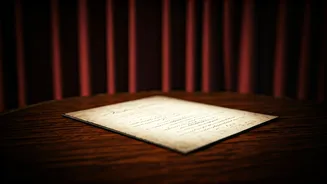
A remarkable discovery has brought to light a dinner menu dating back to January 31, 1897, meticulously preserved and shared by historian Neha Vermani.
This artifact originates from a grand banquet hosted by the Maharaja of Baroda at the opulent Laxmi Vilas Palace in Gujarat, honoring the Maharaja Scindia of Gwalior. The menu itself serves as a vivid window into the sophisticated palates and the era's engagement with international culinary trends. Contrary to what one might immediately assume about a 19th-century Indian royal feast, the offerings were surprisingly cosmopolitan, heavily influenced by French haute cuisine. Vermani herself noted the intriguing presence of elements like truffles and artichokes, presented with elaborate French nomenclature, suggesting a deliberate effort to impress and showcase a refined, globalized taste.
Glimpse of the Grand Menu
The 1897 banquet menu presented an array of dishes that highlight a fascinating synthesis of French techniques and regal Indian preferences. Guests likely began their culinary journey with 'Iotage d'Amandes,' a delicate almond custard intended to gently awaken the palate. Following this, a 'Poisson Braise sauce Mayonnaise' offered braised fish complemented by a rich mayonnaise. The soup course featured 'Creme de Volaille truffes,' an exquisite chicken cream soup elevated by the luxurious aroma of truffles. For the main courses, 'Cotelettes de mouton a l'Italienne' showcased lamb cutlets prepared in an Italian style, likely seasoned with herbs, while 'Selle de perdreau rotie aux Petits Pois' provided roasted saddle of partridge served with fresh peas. A more grounded, yet still refined, offering was 'Fonds d'artichauts a la demi-glace,' featuring tender artichoke bottoms simmered in a classic French brown sauce. The menu also included a nod to Indian flavors with 'Curry de Macedoine de Legumes et Ris,' a vegetable and rice curry, alongside 'Pommes a la creme,' a creamy apple dish. The gastronomic experience concluded with 'Glace de Pistachoo,' a refreshing pistachio ice cream, rounding off a meal of considerable sophistication and international flair.
Echoes of Global Culture
The discovery of this 1897 menu has sparked considerable online discussion, underscoring its significance as more than just a historical curiosity. It serves as tangible proof of how Indian royalty during the British era actively participated in and embraced global cultural trends. Comments from online users suggest a broader understanding of the lifestyle of Indian princes, drawing parallels to Western aristocratic grandeur. Furthermore, observations pointed out that several dishes, while presented in French, likely contained distinct Indian elements, demonstrating a nuanced fusion rather than a simple adoption of foreign cuisine. The consensus is that such elaborate banquets were designed not only to showcase culinary excellence but also to project power, sophistication, and a cosmopolitan outlook, effectively dazzling and impressing guests. This menu, now housed in a US archive, is a compelling artifact illuminating the intricate relationship between Indian elite society and international culture in the late 19th century.