







Key Connectivity Boost
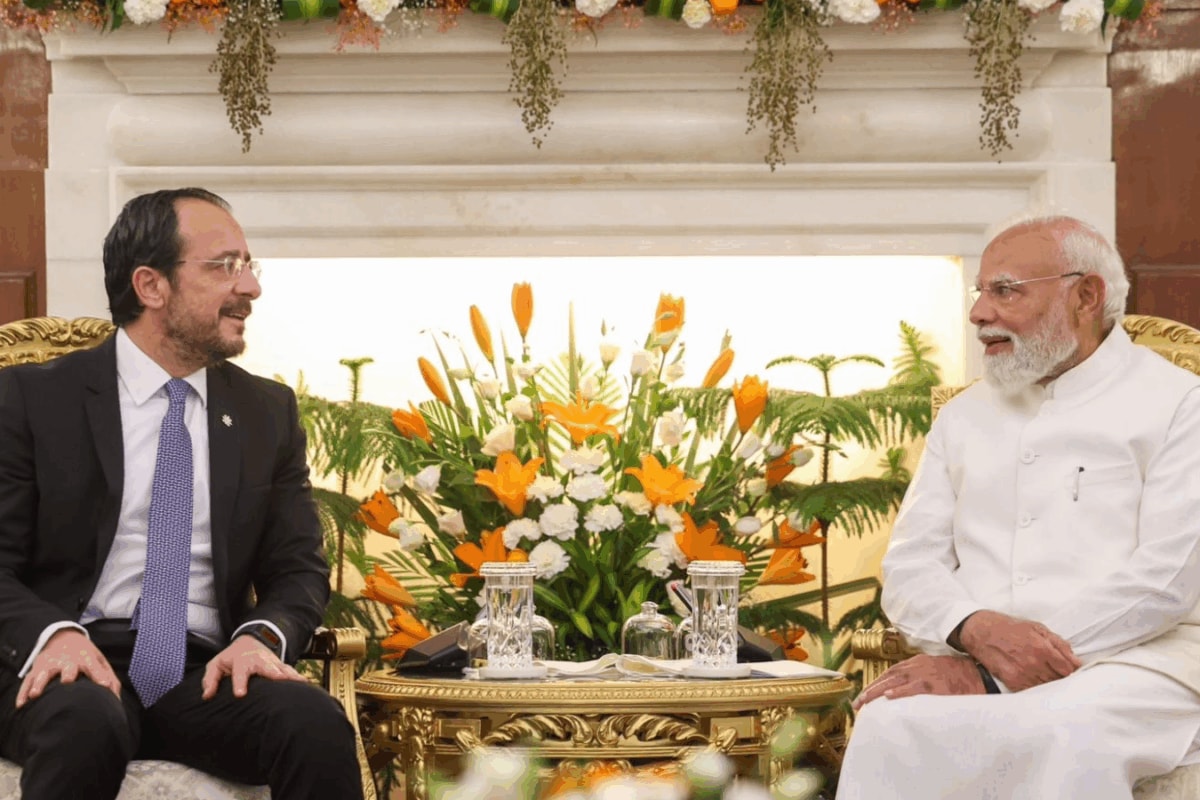
In a significant stride for India's infrastructure, Union Minister for Road Transport and Highways, Nitin Gadkari, alongside Delhi Chief Minister Rekha
Gupta, recently surveyed the concluding stretch of the ambitious Delhi-Mumbai Expressway within the nation's capital. This inspection signifies a pivotal moment in bringing one of the country's most extensive infrastructure undertakings closer to completion. The specific segment under review is instrumental in establishing a vital link for the expressway to both DND and Jaitpur, thereby streamlining transit and improving accessibility between Delhi, the neighboring city of Noida, and Faridabad. Once this section becomes fully operational, it is projected to substantially alleviate the strain on existing major roadways, ensuring a more fluid and efficient movement of vehicles that are either entering or departing from the expressway. This development is a testament to the ongoing efforts to enhance national connectivity and reduce travel friction across key urban corridors.
Transforming Intercity Travel
The expansive Delhi-Mumbai Expressway, stretching over 1,300 kilometers, has been meticulously engineered with the primary objective of drastically reducing travel durations between these two major metropolises, aiming to cut transit time by approximately half. Beyond mere speed, the project prioritizes enhancing road safety standards and optimizing the efficiency of logistical operations nationwide. The segment in Delhi holds particular importance due to the exceptionally high volumes of traffic it manages along the entire route. This vital connection point ensures that the expressway's benefits extend effectively into and out of the densely populated national capital region. The strategic placement and development of this Delhi connector are crucial for realizing the full potential of the expressway in reshaping intercity travel and commerce.
Barrier-Free Tolling Innovation
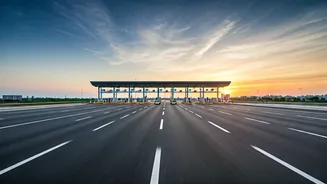
Further revolutionizing the commuting experience, the Delhi-Mumbai Expressway has recently introduced India's inaugural barrier-free toll plaza, conveniently located near Surat. This pioneering facility allows vehicles to pass through without the need to stop, signaling a forward-looking shift towards fully automated toll collection systems across the nation. The Choryasi toll plaza, situated on the stretch connecting Surat and Bharuch, commenced its operational testing phase almost two months prior, on February 2nd. Its design eliminates traditional physical barriers, facilitating unimpeded vehicle flow. This implementation, spearheaded by the National Highways Authority of India (NHAI) as part of the Ministry of Road Transport and Highways' modernization agenda, utilizes advanced Multi-Lane Free Flow (MLFF) technology. The government's ambitious roadmap includes transitioning over 1,050 toll plazas nationwide to similar AI-driven, barrier-free systems by the conclusion of 2026, marking a significant technological leap for India's road infrastructure.
Automated Toll Collection
The new automated tolling system operates seamlessly, with charges being deducted instantaneously. This is achieved through a sophisticated combination of Automatic Number Plate Recognition (ANPR) technology and the widespread integration of FASTag. This innovative approach ensures a cashless and effortless tolling experience for motorists, eliminating the need for queues and manual transactions. The broader national objective is to convert more than 1,050 toll plazas across the country to these advanced, AI-powered, barrier-free systems by the end of 2026. This strategic move is designed to enhance traffic efficiency, reduce delays, and modernize the entire toll collection infrastructure, making travel smoother and more convenient for millions of users.