







Simulating the Universe
Scientists have created a new dark matter simulation, a tool to understand the universe better. These simulations are complex computer models. They use
known physics to recreate how things work in space. The study of galaxies helps us learn how the universe came to be. This innovative simulation goes beyond existing models, offering improved insights into galaxy formation. It accounts for various factors, including the interaction between dark matter and visible matter. The goal is to accurately represent how galaxies evolve over billions of years. The process involved running extensive simulations on supercomputers. They worked to examine the dynamics within galaxies. The team gathered enormous datasets. They hope to gain a comprehensive view of the cosmos. This research may lead to a revised understanding of galactic development.
Dark Matter's Influence
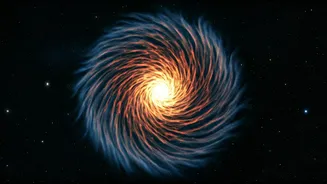
Dark matter is a mysterious substance, not easily seen. It makes up a large part of the universe. Its influence on galaxy formation is a focus of study. The new simulation examines how dark matter interacts with regular matter. This interaction drives the formation of galaxies. It influences their shapes, sizes, and behaviors. The simulation highlights dark matter's role in the formation of galactic structures. It affects the arrangement of stars, gas, and dust. Scientists can then investigate the way dark matter affects the shapes of galaxies. Through this work, they can study the dynamics of rotating galaxies and how matter moves through space. The simulation helps to illustrate the gravitational effects of dark matter. This makes it possible to study the formation and evolution of galaxies. This aids in creating a complete cosmological view.
Key Findings of Study
The research team made many interesting discoveries using the new simulation. One important finding is a fresh understanding of galaxy formation. The simulation revealed how dark matter's distribution impacts galactic structures. It showed how galaxies gain their shapes and sizes. The researchers also studied the relationship between dark matter and gas. This highlighted the processes that influence star formation. Further, the team examined the distribution of stars. They could better understand how galaxies behave over time. The results suggest that the current cosmological models might need adjustments. They are working on refining the prevailing ideas of galaxy evolution. These revelations could change the direction of astrophysical studies. Further work is sure to bring additional insights.
Implications and Future
The new dark matter simulation has significant implications for how we study the universe. It helps reshape cosmological models to better explain how galaxies evolve. The insights from the simulation can guide future observational studies. Astronomers will have a better understanding of what to look for when observing galaxies. This study enables the creation of more accurate simulations. Researchers can incorporate additional factors to refine their understanding. The research team aims to integrate data from telescope observations. This will allow them to validate and enhance their models. These advancements will boost research in astrophysics. They will bring us closer to a full understanding of the cosmos. The research promises to offer new knowledge, sparking further questions and promoting exploration.