





The Solar Threat Looms
Scientists are sounding the alarm about a rare, yet potentially devastating, solar phenomenon: a storm of the magnitude seen during the 1859 Carrington
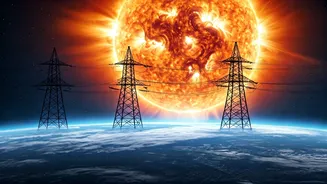
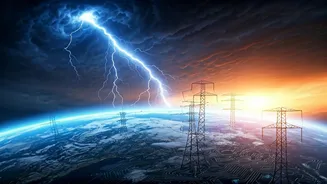
Event. Such an extreme space weather event, driven by massive coronal mass ejections (CMEs) from the Sun, could unleash a cascade of disruptions across our modern technological infrastructure. Unlike the telegraph systems of the 19th century, which were significantly impacted, our current society is built upon a foundation of interconnected digital systems that are far more vulnerable to the intense radiation and charged particles that accompany these solar superstorms. The potential for widespread satellite failures, crippling GPS outages, and grid-scale power blackouts makes this a critical concern for global safety and stability. The Sun's current active phase increases the probability of such powerful events, necessitating urgent preparation.
Crippling Modern Technology
A solar storm on the scale of the Carrington Event poses a grave threat to the very technologies we depend on daily. Satellites, essential for global communication, weather forecasting, and navigation, could be severely damaged or rendered inoperable by the onslaught of energetic particles. This would lead to a domino effect, rendering GPS systems unreliable, which in turn impacts critical sectors like aviation, shipping, and even personal navigation devices. Furthermore, our power grids, already strained at times, are particularly susceptible. Geomagnetic currents induced by solar storms can overload transformers, potentially leading to widespread and prolonged blackouts. The economic repercussions of such an event could be staggering, as evidenced by a recent $500 billion loss in agriculture alone due to a temporary US satellite system outage. The delicate balance of our technological ecosystem is highly vulnerable to these cosmic disturbances.
Lessons from the Past
History provides stark warnings about the power of solar storms. The 1859 Carrington Event caused telegraph systems to malfunction spectacularly, with operators experiencing electric shocks and equipment fires. More recently, a geomagnetic storm in March 1989 plunged Quebec into darkness for nine hours, highlighting the vulnerability of modern power infrastructure. Experts estimate that a Carrington-level storm occurs only once every 100 to 200 years, underscoring its rarity but also its potential for extreme impact. These historical events serve as crucial case studies, motivating ongoing efforts to enhance our preparedness and resilience. By understanding the mechanisms of these storms and their past effects, we can better develop strategies to safeguard our critical systems against future, potentially more damaging, solar onslaughts.
Building a Resilient Future
In response to the persistent threat of powerful solar storms, significant efforts are underway to bolster our defenses. Continuous monitoring of the Sun by dedicated satellites, such as GOES and DSCOVR, provides crucial early warnings of impending CMEs. This advance notice allows operators to implement protective measures, like switching vulnerable satellites to a 'safe mode' and enabling utility companies to take steps to safeguard transformers. Beyond immediate responses, agencies are investing in long-term solutions, including the development of more robust satellite technology and hardware upgrades for power grids. These enhancements, such as backup transformers and surge-blocking capacitors, aim to 'harden' our essential infrastructure against the electromagnetic assault of future solar superstorms. The ongoing enhancement of prediction models and monitoring systems is vital for mitigating the risks associated with these unpredictable cosmic events.