




The Electronic Shift
The automotive world is witnessing a significant transformation in how vehicles stop, driven by the rapid evolution of electric vehicles (EVs). Gone are
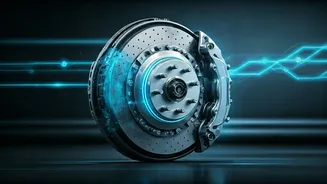
the days when conventional hydraulic braking systems were the sole custodians of safety. Today, EVs are increasingly adopting sophisticated electronic braking systems, often complementing or entirely replacing their hydraulic counterparts. This technological leap is crucial as electric mobility gains global momentum, demanding a deeper understanding of these advanced systems from both manufacturers and consumers who prioritize precision, effectiveness, and overall safety in their vehicles. The integration of electronics with mechanical components births the 'brake-by-wire' technology, a departure from purely hydraulic force. Instead, driver inputs are translated into electronic signals, processed by a control unit, and then translated into precise braking actions. This allows for unprecedented control over brake force distribution, response times, and vehicle stability, fundamentally changing the driving experience and enhancing overall safety.
Regenerative Braking Magic
A standout feature revolutionizing electric mobility is regenerative braking. Instead of simply dissipating energy as heat like traditional brakes, EVs utilize their electric motors to recapture kinetic energy during deceleration. This captured energy is converted into electricity and stored back in the vehicle's battery. This dual function—braking the vehicle while simultaneously replenishing its power source—significantly boosts efficiency and extends the driving range, a key concern for EV adoption. The seamless integration of regenerative braking with conventional friction brakes is managed by an electronic brake control unit, ensuring smooth transitions and a comfortable ride. In hybrid vehicles, where both internal combustion engines and electric motors coexist, this system becomes even more complex, orchestrating regenerative and traditional braking to create an intelligent and highly efficient braking network.
Brake-by-Wire Explained
Brake-by-wire technology represents a paradigm shift, moving away from the physical linkages of hydraulic systems towards purely electronic communication. When a driver applies the brake pedal, sensors transmit this input as an electronic signal to a central control unit. This unit then directs actuators at each wheel to apply the brakes. This system unlocks sophisticated dynamic braking capabilities, adapting to various driving scenarios. For instance, on slippery surfaces where traditional brakes might cause a wheel to lock and skid, brake-by-wire systems can precisely modulate pressure, keeping the wheel in contact with the road. This innovation directly enhances braking effectiveness, offering a safer, more controlled, and durable braking experience for EV drivers.
Motor Braking Integration
Electric motor braking is another pivotal element in modern EV braking. It leverages the inherent resistance of the electric motor during deceleration, offering an alternative to friction-based braking. This method is particularly effective at higher speeds and often works in tandem with regenerative braking systems. Upon detecting a driver's deceleration input, the electronic brake control unit intelligently orchestrates a blend of motor braking and friction braking to achieve optimal stopping power while maximizing energy recovery. Beyond its efficiency benefits, electric motor braking also reduces wear and tear on the mechanical brake components, leading to lower maintenance costs and increased driver confidence through predictable braking performance, regardless of load conditions.
Smart Braking Advancements
The realm of advanced braking technologies extends beyond mere energy recovery and electronic actuation. Contemporary EVs are increasingly equipped with predictive algorithms, vehicle-to-vehicle communication capabilities, and AI-driven adjustments to create truly intelligent braking systems. These systems can utilize sensors to identify obstacles or changing road conditions in real-time, allowing the electronic brake control unit to proactively adjust braking forces, thereby preventing potential accidents. From an engineering perspective, this integration represents a significant leap in EV braking efficiency. Brake-by-wire, for example, can actively counteract understeer or oversteer by dynamically applying braking force to specific wheels. Combined with regenerative braking, these strategies ensure maximum energy conservation during everyday driving.
System Challenges Ahead
Despite the numerous advantages offered by electronic braking systems in EVs, several challenges persist. Paramount among these is the absolute necessity for the electronic brake control unit to be exceptionally reliable; any failure could compromise vehicle safety. Furthermore, achieving a seamless and comfortable integration between regenerative energy recovery and conventional mechanical braking is crucial to avoid driver discomfort or performance degradation. Hybrid vehicles, while benefiting from the dual powertrain, face heightened complexity in synchronizing both electric motor and conventional braking. Engineers must meticulously balance mechanical wear, software integrity, and energy recovery efficiency to achieve optimal EV braking performance.
Hybrid Braking Synergy
Hybrid vehicles present a unique challenge in braking, as they must harmonize the characteristics of both internal combustion engines and electric motors. Their hybrid braking systems must skillfully synchronize conventional braking, regenerative braking, and brake-by-wire functionalities. The electronic brake control unit acts as the central intelligence, continuously fine-tuning the distribution of braking forces to ensure maximum safety and energy conservation. The result is a braking experience that is smooth for the driver and optimizes energy recovery. Research indicates that incorporating these cutting-edge braking technologies can improve EV braking efficiency in hybrids by up to 30 percent compared to conventional braking systems alone.
Future of Smart Brakes
Looking ahead, EVs are poised to become even more intelligent in their braking capabilities. The integration of advanced autonomous driving systems, AI-powered predictive braking, and further refinements in regenerative braking technologies will fundamentally reshape vehicle safety and energy utilization. Future electronic brake control units, for instance, may predict traffic flow and adjust braking proactively, even before a driver's input, establishing a new level of proactive safety. Machine learning algorithms could also be developed to optimize regenerative energy capture across diverse driving conditions, further enhancing EV braking efficiency, reducing battery drain, and extending the lifespan of braking components.
Market Growth and Trends
The global market for electronic braking systems in EVs is experiencing robust growth. As EV adoption accelerates, regulatory bodies are increasingly emphasizing safety features, necessitating advanced braking solutions. Manufacturers are responding by dedicating substantial resources to research and development, aiming to create brake-by-wire systems that meet the demands of high-performance vehicles and autonomous driving. Market data consistently shows that vehicles equipped with smart braking systems achieve higher safety ratings, improved energy efficiency, and greater consumer appeal. The synergistic combination of regenerative braking and electric motor braking is emerging as a significant differentiator for EV manufacturers in the international arena.
Braking: A Game-Changer
The transition of EVs to electronic braking systems signifies more than just a technological upgrade; it represents a holistic solution that enhances efficiency, safety, and overall performance. Modern EVs achieve unprecedented braking efficiency through the intelligent integration of brake-by-wire technology, regenerative braking systems, and electric motor braking. As smart braking systems, AI-driven predictions, and continuous regenerative energy recovery converge, the next generation of braking technologies will not only improve stopping capabilities but also forge a deeper connection between vehicles, energy, the environment, and driver expectations. Understanding these systems is vital for appreciating the future of mobility, where efficiency and safety coexist harmoniously.