




A Resilient Bloom
Asia's largest tulip garden has emerged as a symbol of resilience, playing a crucial role in revitalizing Kashmir's tourism sector. Following a period
of significant decline, attributed in part to the devastating Pahalgam terror attack on April 22, 2025, the garden's success in the 2026 spring season has been nothing short of extraordinary. In a mere 30 days, it welcomed over 3.5 lakh visitors, a testament to the region's recovery and appeal. This impressive figure signifies a substantial turnaround, drawing a stark contrast to the downturn experienced in the previous year. The garden's vibrant display not only captivated attendees but also served as a beacon of hope, rebuilding the confidence of potential tourists and showcasing Kashmir's enduring beauty and charm.
Rekindling Visitor Confidence
The surge in visitor numbers to the Tulip Garden in 2026, surpassing 3.5 lakh by mid-April and including approximately 1,200 international guests, is a direct result of enhanced safety measures. The stark impact of the 2025 Pahalgam attack, which saw Kashmir's total tourist arrivals plummet to 9.16 lakh in 2025 (compared to 26 lakhs in 2024), necessitated a robust response. Authorities implemented a comprehensive suite of new security protocols for the 2026 season, successfully reassuring tourists. Visitors expressed surprise at the reality of Kashmir, finding it far safer than their preconceptions, and lauded the effective security arrangements. This renewed sense of security, coupled with the region's natural splendor, has encouraged many to reconsider Kashmir as a viable and enjoyable travel destination.
A Symphony of Colors
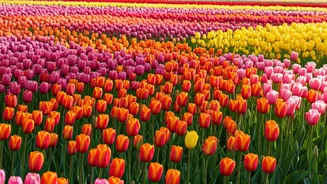
The 2026 Tulip Show was a visual spectacle, featuring an impressive display of 18 lakh tulips spanning over 70 distinct varieties. Complementing this floral extravaganza were approximately 100,000 other bulbous blooms, including elegant daffodils, fragrant hyacinths, and captivating narcissus. To further enhance the visitor experience and boost tourism, organizers introduced engaging new attractions. These included designated 'selfie points' that allowed guests to capture memorable moments against the stunning backdrop, and vibrant cultural zones dedicated to showcasing exquisite local handicrafts. A significant publicity campaign orchestrated by the Jammu and Kashmir authorities also played a vital role in re-energizing the tourism industry and drawing attention to these attractions.
Voices of Assurance
Testimonials from visitors underscore the success of the safety initiatives and the overall positive experience in Kashmir. Rupali Gambhir from Nagpur shared her feeling of complete safety and the remarkable cooperativeness of the locals, noting that she felt no fear even when out late in the evening. She described the garden as 'paradise on earth.' Similarly, Sadiq Mohammed from Mumbai, on his fourth day of visiting Gulmarg, Sonamarg, and en route to Pahalgam, observed extensive security presence, including CRPF personnel who even offered guidance. He emphasized that despite concerns, he had not felt insecure at any point and expressed a strong desire to return. These accounts powerfully counter negative perceptions and highlight the tangible improvements in the tourist experience.
Economic Rejuvenation
The successful season at the Tulip Garden is being hailed by tourism stakeholders and the Jammu and Kashmir government as a pivotal stride towards the full restoration of Kashmir's tourism economy. During the peak bloom period, hotel occupancy across the valley reportedly reached an impressive nearly 70%. Although the total visitor numbers for the 2026 season might not have matched the previous year's peak, primarily due to external geopolitical tensions affecting international travel, the Tulip Show has undeniably invigorated tourism activity. It is viewed as a strong commencement to the year's tourism calendar, with optimistic projections for a higher overall tourist influx in 2026. To accommodate this anticipated growth and enhance visitor exploration, several new and unique tourist destinations have also been introduced across the region.