






Expressway's Swift Arrival
The recently unveiled Delhi-Dehradun Economic Corridor, often referred to as the Delhi-Dehradun Expressway, has revolutionized travel between India's capital
and the picturesque city of Dehradun. Journeys that previously spanned many hours can now be accomplished in approximately two and a half to three hours. This significant reduction in travel time offers immense convenience to both leisure travelers heading to Uttarakhand and those commuting for work. The efficiency of this new route means that reaching Dehradun is quicker than ever before, opening up possibilities for more frequent and less arduous trips to the region. The substantial enhancement in connectivity promises a smoother experience for anyone traveling from Delhi to the gateway of the Garhwal Himalayas.
The Dehradun Bottleneck
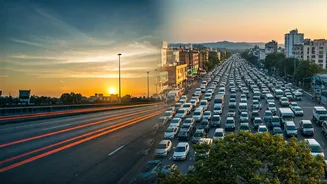
Despite the swift access to Dehradun, the onward journey to the popular hill station of Mussoorie often proves to be a significant hurdle. Many travelers find that the time spent navigating through Dehradun's city limits can rival, or even exceed, the time taken to travel from Delhi to Dehradun. This means that the anticipated quick transition from city travel to serene mountain air is frequently replaced by frustratingly slow progress. The city's infrastructure, struggling to cope with the increased volume of vehicles, creates substantial traffic jams, particularly as one tries to leave the city and head towards Mussoorie. This paradox of rapid arrival and slow departure leaves many tourists exasperated.
Urban Traffic Woes
The core of Dehradun's travel predicament lies in severe traffic congestion encountered right at the city's entry points and within its busy thoroughfares. Vehicles arriving from the Delhi-Dehradun Expressway, accustomed to high speeds, are abruptly forced to slow down and navigate through numerous congested intersections. Key areas like Transport Nagar, ISBT, Adhat Bazaar, Rajpur Road, and Mussoorie Road frequently become choke points, resulting in extensive queues and significantly prolonged travel times. This situation is exacerbated on weekends and during peak tourist seasons when the influx of visitors dramatically increases, putting an immense strain on the existing road network. The convergence of traffic from various directions further intensifies these bottlenecks, impacting both local residents and tourists alike.
Infrastructure Lag
Compounding the issue of current traffic is the slow progress on several crucial infrastructure projects that were intended to alleviate congestion and improve traffic flow. Projects like the Mussoorie-Kimadi Road, which is still in its preliminary survey stages, and the Asharodi-Jhajhra Road, if completed, would offer vital alternative routes, diverting traffic away from the city center. The Rispana-Bindal Corridor faces delays due to land acquisition challenges and encroachments. Furthermore, long-standing projects such as the Asharodi-Mohkampur elevated road and the relocation of Adhat Bazaar remain unfinished. This delay in completing essential upgrades means Dehradun's road network is ill-equipped to handle the rising vehicular load, especially with the added traffic from the new expressway, leading to a continuous cycle of congestion.
Accident Risks and Future Concerns
The sudden transition from the high-speed Delhi-Dehradun Expressway to the narrower, more congested city roads presents a significant safety concern. Residents have voiced worries about the increased risk of accidents as faster vehicles enter areas with slower-moving traffic and pedestrian activity. The rapid influx of vehicles without corresponding upgrades to Dehradun's internal road system raises alarms for the future. Experts caution that without the timely completion of these vital infrastructure projects, the new expressway could inadvertently worsen traffic conditions rather than improve them. As tourist numbers continue to climb, Dehradun's existing road infrastructure is increasingly showing signs of being overwhelmed, necessitating urgent intervention to prevent chronic and escalating traffic problems.