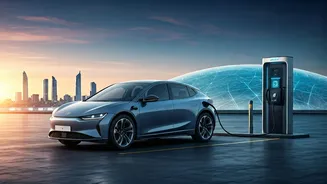








EVs: The Big Picture
The electric vehicle (EV) market in India is experiencing rapid expansion, reshaping the country's automotive sector. Numerous factors contribute to this
growth, including rising fuel prices, environmental concerns, and government incentives designed to promote EV adoption. Policy changes have played a pivotal role, with favorable regulations and subsidies making EVs more accessible and attractive to consumers. The industry is also witnessing an influx of new players, ranging from established automakers to innovative startups, each vying for a share of the market. This surge in competition is driving advancements in EV technology, including improvements in battery range, charging infrastructure, and overall vehicle performance. As a result, the Indian consumer now has more choices than ever before, with a diverse range of EV models available across various price points and vehicle categories.
Fuel Production Explained
The production of E20 fuel, a blend of 20% ethanol and 80% gasoline, is a significant topic as India transitions towards sustainable fuel solutions. Ethanol, a biofuel derived from agricultural sources like sugarcane and corn, plays a vital role. The process begins with the fermentation of these crops, converting sugars into ethanol. This ethanol is then blended with gasoline at a specific ratio to create E20. This blend offers numerous benefits, including reduced greenhouse gas emissions and lower dependence on fossil fuels. The government's push for E20 is part of a broader strategy to decrease India's carbon footprint and improve energy security. E20 fuel is designed to be compatible with a wide range of vehicles, though some modifications may be needed in older models. The availability of E20 fuel is expanding rapidly across the country, supported by investments in ethanol production and distribution infrastructure.
Vehicle Sales Trends
The automotive industry is constantly evolving, with several trends shaping vehicle sales in India. One prominent trend is the increasing demand for SUVs and compact SUVs, reflecting consumer preferences for versatile and stylish vehicles. Electric vehicles are also gaining traction, with a steady rise in sales driven by environmental consciousness and government support. The growing popularity of connected car technologies, offering features like navigation, infotainment, and remote diagnostics, is another key trend influencing consumer choices. There is also a shift towards premium vehicles, reflecting the growing affluence of a segment of the population. The integration of advanced safety features like airbags, ABS, and driver-assistance systems is becoming increasingly important, as consumers prioritize vehicle safety. Automakers are responding to these trends by introducing new models, upgrading existing ones, and investing in technologies that cater to changing consumer demands.
The Mahindra XUV 7XO
The Mahindra XUV 7XO is a standout offering in the automotive market, featuring several key features. One important aspect is its enhanced safety, including advanced airbags and electronic stability control, prioritizing passenger protection. Comfort is another key focus, with premium interiors, spacious cabins, and comfortable seating arrangements. Technological integration is also a highlight, with a user-friendly infotainment system, connected car features, and advanced driver-assistance systems enhancing the driving experience. Performance is another critical factor, with a range of engine options designed to deliver robust performance and fuel efficiency. The vehicle's design is noteworthy, with a modern and stylish exterior that captures attention. Additionally, the Mahindra XUV 7XO offers enhanced fuel efficiency, reducing running costs for owners. These standard features across all variants showcase the manufacturer's commitment to delivering a comprehensive and appealing vehicle package.