



Viral Image Sparks Concern
Recently, a photograph circulating online depicted what appeared to be a compromised section of a concrete parapet wall along the under-construction Mumbai
Metro Line 4, situated near Anand Nagar on the Ghodbunder Highway. This visual evidence triggered apprehension among local residents and daily commuters, raising anxieties about potential construction safety issues, particularly in light of a previous incident on LBS Marg in Mulund. In response to the widespread concern, the Thane regional disaster management cell promptly alerted the Metro authorities. Following this alert, officials from the Mumbai Metropolitan Region Development Authority (MMRDA) swiftly visited the site to conduct an immediate inspection of the structure. Their investigation revealed that the perceived vulnerability was superficial and did not compromise the structural integrity of the parapet. The MMRDA officials assured the public that the necessary supporting stitch work for the parapet had been completed, confirming that the structure is indeed safe and sound.
Laxmi Nagar Station Breakthrough
Significant progress has been made on Mumbai Metro Line 4 with the successful acquisition of a substantial land parcel measuring 16,762 square meters in Vikhroli for the much-anticipated Laxmi Nagar station. This development marks the resolution of the final pending station on the corridor, which had experienced a six-year delay. The newly secured land will facilitate the construction of the station itself, along with an adjoining viaduct and an access road. While physical construction has not yet commenced, preliminary surveys are actively being conducted. This acquisition brings the overall land acquisition for the entire corridor to near completion, with only a small plot of 200 square meters in Bhandup remaining for a high-tension tower, which is expected to be resolved within the next month.
Project Overview and Status
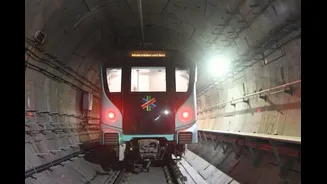
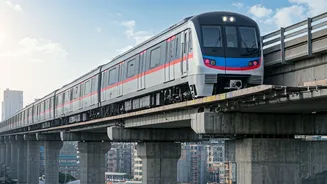
Mumbai Metro Line 4 is designed as an elevated corridor stretching 32.32 kilometers from Wadala to Kasarvadavali, encompassing 30 stations and representing an estimated project cost of Rs 14,549 crore. The initial stretch, comprising 4.4 kilometers from Gaimukh to Cadbury Junction, including stations like Gaimukh, Vijay Garden, Kasarvadavali, and Cadbury Junction, has already seen trial runs completed with a six-coach BEML train. While the initial target for this stretch was April 2026, it is currently not ready. The project is planned for phased opening: Phase 2, extending from Cadbury Junction to Gandhi Nagar (21.5 km), is anticipated by October 2026. Phase 3, connecting Gandhi Nagar to Wadala, is expected by October 2027. Upon becoming fully operational, this corridor is projected to significantly reduce travel times between Thane and Mumbai by 50-75%, thereby easing congestion along the eastern corridor and enhancing daily commuting.
Accelerated Metro Expansion
The year 2026 is set to witness a significant acceleration in Mumbai's metro network expansion, following the planned launch of the Aqua Line in 2025. Multiple new metro corridors across the Mumbai Metropolitan Region are slated to become operational, offering robust alternatives to the existing suburban railway system. Authorities are preparing to inaugurate sections of four metro lines and one extension within the upcoming year, with two key launches anticipated as early as January. Concurrently, major infrastructure projects such as the Thane-Borivali Twin Tunnel and segments of the Eastern Freeway are scheduled for completion at a later stage. Specifically, Metro Lines 4 and 4A, which form a vital link between Mumbai and Thane, are expected to commence operations in phases throughout 2026. It is estimated that nearly two-thirds of the Line 4 alignment could be functional this year. The initial 10.5-kilometer stretch from Cadbury Junction to Gaimukh, which includes Line 4A, a 2.7-kilometer spur connecting Kasarvadavali and Gaimukh, is targeted for completion by March. Furthermore, a 10-kilometer extension to Gandhi Nagar in Vikhroli is planned to be operational within the next six months, with the full completion of Line 4 anticipated by 2027.