




Defining 'Town'
The concept of a 'town' typically conjures images of bustling streets, a significant population, and established governance. However, the boundaries of what
constitutes a town can become blurred when considering exceptionally small settlements. What metrics do we use? Is it population size, the presence of essential services like a post office or a general store, or perhaps a formal declaration from a governing body? The definition itself is fluid and subject to interpretation, especially when a place is so compact it could be mistaken for a hamlet or a mere cluster of houses. This ambiguity allows for extraordinary claims, like the one we are about to explore, where a community exists on a scale that is almost unbelievable, prompting us to reconsider our preconceptions about size and significance in human settlements. Understanding these definitional nuances is crucial before we can even begin to evaluate claims of being the 'smallest.'
The Contender Revealed
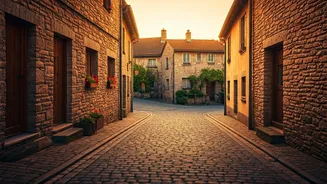
Amidst the vast landscapes, a peculiar settlement has captured attention, sparking debate about its status as the world's smallest town. Picture this: a place so diminutive that its entire footprint is constrained by a mere two streets. Within this incredibly limited area, a population of just 30 individuals calls this unique locale home. This remarkable concentration of people within such a confined space challenges conventional notions of what a town should be. It’s a place where personal interactions are likely immediate and constant, and where the fabric of community is woven tightly. The sheer scarcity of land and the small number of residents create an intimate living environment that is vastly different from larger, more sprawling urban centers. This extreme compactness is the very essence of its claim to fame, making it a fascinating case study in human habitation.
Life in Miniature
Living in a place defined by just two streets and a population of 30 offers a unique perspective on community life. The daily rhythm in such a small settlement is bound to be different. Imagine a scenario where everyone knows each other intimately, and the concept of anonymity is virtually non-existent. Social connections are likely deeply ingrained, with shared experiences and mutual reliance forming the bedrock of their society. The logistical aspects of such a small town would also be fascinating; perhaps local amenities are hyper-concentrated, or residents share resources in ways that larger towns cannot. This intimate scale fosters a strong sense of belonging and shared responsibility, creating a social ecosystem that is both resilient and closely knit. It's a testament to how humans can adapt and thrive even in the most constrained environments, forging strong bonds in a world where space is at a premium.