






Hidden Havens Revealed
Long-haul flights are demanding, and for flight attendants and pilots, maintaining peak performance throughout durations stretching 12 to 18 hours or more
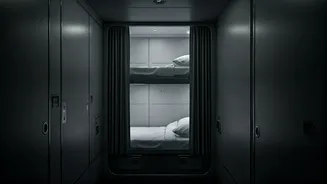
is paramount. To achieve this, aircraft are ingeniously equipped with concealed crew rest areas. These aren't luxurious suites, but rather functional spaces, often referred to as 'secret bedrooms' or 'crew bunks,' designed for essential rest. Typically situated away from passenger view, either elevated within the aircraft's ceiling or nestled below the main cabin, these compartments are crucial for operational integrity. Access might involve discreet staircases or ladders, further emphasizing their hidden nature, ensuring that while passengers are engrossed in their journey, the crew has a dedicated zone to recharge, vital for managing everything from routine service to unexpected emergencies with alertness and efficiency.
Compact Comfort Zones
On larger aircraft models, such as the Boeing 777 or Airbus A350, designers have masterfully utilized otherwise unused space to incorporate these essential rest facilities. These bunks are often compared to capsule hotel rooms, offering just enough area for a person to lie down comfortably. Each individual bunk is typically furnished with a basic mattress, a blanket, and a pillow for a degree of comfort. Essential amenities like a reading light are usually provided, and some compartments may include a privacy curtain for an added layer of seclusion. It's noteworthy that pilots and flight attendants generally have separate rest areas, with pilot compartments often being slightly more spacious, reflecting the critical need for their uninterrupted rest before returning to cockpit duties, a vital aspect of aviation safety protocols.
Strategic Shift Scheduling
The ability of the flight crew to remain energetic and responsive throughout an entire long-haul journey is not a matter of chance but a result of meticulous planning, particularly concerning rest. Flight attendants do not sleep simultaneously; instead, their rest periods are carefully orchestrated into shifts. This ensures that there is always a sufficient number of crew members available in the cabin to attend to passenger needs and safety requirements at any given moment. For exceptionally long flights, crew members might get a few hours of rest spread out over the duration of the flight. Even during these crucial rest periods, crew members are expected to be ready to react swiftly to any situation. To maintain security during potential turbulence, these rest compartments are equipped with seat belts or harnesses, ensuring the safety of the crew even while they are trying to recharge.
Safety Regulations Ensured
The imperative for flight crew rest is so significant that it is governed by stringent regulations set forth by aviation authorities worldwide, including bodies like the Federal Aviation Administration and the Directorate General of Civil Aviation. These organizations mandate that airlines must implement robust policies to ensure their staff receive adequate breaks. The primary objective behind these rules is to mitigate the risks associated with fatigue, which can severely impair judgment and reaction times. By adhering to these guidelines, airlines guarantee that their flight attendants and pilots can consistently uphold the highest safety standards throughout their demanding duties. These regulations underscore the critical role of the hidden rest areas in maintaining a safe and efficient flying experience for everyone on board.