





Enhanced Visibility is Key
When driving in heavy rain, visibility significantly drops, making it a serious safety concern. It's vital to ensure your windshield wipers are in prime
condition. Check them for any signs of wear and tear; worn-out wipers can smear water instead of clearing it, further obscuring your view. Additionally, using your car's defogger system is crucial to prevent the windshield from fogging up on the inside due to the temperature difference. Keep your headlights on, even during daylight, to make your vehicle more visible to other road users. Remember, in misty or foggy conditions, low-beam headlights are more effective than high beams, which can reflect off the moisture and worsen visibility. Regularly cleaning your headlights and taillights also contributes to better illumination and recognition on the road.
Maintain Safe Following Distance
Wet roads drastically reduce tire traction, meaning your car will take longer to brake. It's imperative to increase the distance between your vehicle and the one in front. A common rule of thumb is to double your usual following distance; if you normally keep two seconds of separation, aim for four seconds in rainy conditions. This extra space provides a buffer, giving you more time to react and brake safely if the vehicle ahead stops suddenly. Sudden braking can lead to skidding, especially on slick surfaces, so a generous gap is your best defense against collisions and loss of control. Be extra cautious when approaching intersections or areas where traffic might be congested.
Slow Down Significantly
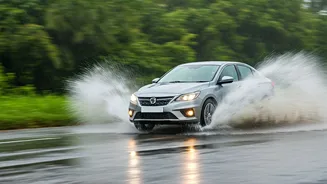
Speed is your enemy on rainy roads. Driving at reduced speeds is paramount for maintaining control and allowing for adequate reaction time. The faster you go, the less control you have over your vehicle, especially when encountering puddles or hydroplaning. Hydroplaning occurs when a layer of water builds up between your tires and the road surface, causing you to lose steering and braking ability. Lowering your speed significantly decreases the risk of hydroplaning and allows you to navigate the road with greater precision and safety. Be patient and adjust your speed according to the road and weather conditions, rather than sticking to the usual speed limits.
Check Tire Condition
Your tires are your only point of contact with the road, making their condition critical, especially in rain. Ensure your tires have adequate tread depth to effectively channel water away from the contact patch. Worn tires with shallow treads are prone to hydroplaning and significantly reduce braking effectiveness. Check your tire pressure regularly, as underinflated or overinflated tires can also compromise handling and grip. A simple visual inspection for any cuts, bulges, or embedded objects should be part of your pre-trip routine. Properly maintained tires are non-negotiable for safe driving in wet weather.
Brake Gently and Early
Sudden braking on wet surfaces can be hazardous. Instead of slamming on the brakes, apply them gently and progressively. This helps to maintain traction and avoid skidding. Anticipate stops well in advance, especially when approaching traffic lights, junctions, or slower-moving vehicles. By braking early and smoothly, you give your tires more time to grip the road and reduce the risk of an accident. If you do feel your car starting to skid, ease off the brakes and steer gently in the direction you want to go. Practice smooth braking techniques even in dry conditions to build good habits.
Avoid Cruise Control
While cruise control can be convenient on highways, it's a feature you should absolutely disengage when driving in rainy conditions. Cruise control systems are designed to maintain a set speed, and they do not automatically adjust for reduced traction or the increased risk of hydroplaning. If your vehicle begins to hydroplane while cruise control is active, it can exacerbate the situation, making it harder to regain control. Manually managing your speed allows you to react more effectively to changing road conditions and maintain a consistent, safe pace without external interference. Rely on your own judgment and foot to control your speed.
Prepare for Puddles and Waterlogging
Roads can become unpredictably flooded during heavy rainfall, creating deep puddles and waterlogged sections. Entering a large puddle at speed can cause your car to lose traction, steer erratically, or even stall if water enters the engine. Before driving through a suspected flooded area, assess its depth if possible. If it looks too deep, it's safer to find an alternative route or wait for the water to recede. If you must drive through, do so slowly and steadily, maintaining a consistent throttle. Once through, gently apply your brakes to help dry them out, as wet brakes can lose their effectiveness.