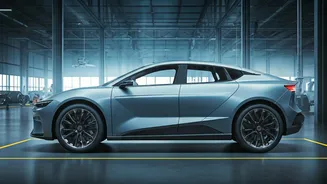








Speeding Up Design
Rapid prototyping offers a huge advantage: the ability to quickly create and evaluate physical models. Before these methods became available, traditional
methods were time-consuming and expensive. This involved creating full-scale prototypes using conventional techniques like machining or molding. These processes could take weeks or even months. The process of generating a physical prototype often meant long lead times and substantial costs. With rapid prototyping, engineers can now produce prototypes in a fraction of the time, often within days or even hours. This accelerated process allows for more iterations, facilitating a more streamlined design process. Designers can test multiple versions, quickly identify flaws, and refine designs with feedback from testing.
Faster Product Development
Rapid prototyping significantly reduces the time it takes to bring new automotive products to market. By swiftly producing and testing prototypes, manufacturers can identify and resolve design issues earlier in the development cycle. The traditional process of designing and validating new parts could be lengthy, leading to significant delays. Rapid prototyping helps to accelerate these processes, meaning that automakers can now roll out new models and features much faster. Moreover, rapid prototyping enables more efficient collaboration between designers, engineers, and manufacturing teams. The ability to quickly produce and share physical models helps to improve communication and coordination. Teams can collectively view and touch the models, facilitating better understanding, and encouraging creative collaboration. This improves the overall product development journey.
3D Printing Advantages
3D printing, a key technology within rapid prototyping, offers unique benefits for the automotive industry. Unlike conventional manufacturing methods, 3D printing can create complex geometries and intricate designs that would be difficult or impossible to produce using traditional techniques. This allows for innovative designs with advanced features and enhanced functionality. Furthermore, 3D printing facilitates the use of various materials, including plastics, composites, and metals. The capacity to select the best material based on the component's function enables the creation of high-performance, lightweight parts. This improves fuel efficiency and overall vehicle performance. Also, 3D printing promotes customization. Manufacturers can tailor components to meet specific requirements, allowing for personalized designs and specialized parts.
Cost Savings & Efficiency
Rapid prototyping contributes to significant cost savings in several ways. The ability to quickly identify and correct design flaws reduces the likelihood of costly errors during the production phase. By producing physical models early in the development cycle, manufacturers can catch mistakes that would have been costly to fix later. Rapid prototyping also helps to optimize the use of materials. By testing different designs and materials, engineers can identify the most efficient solutions, reducing material waste and lowering production costs. In addition, rapid prototyping allows for more efficient production processes. The technology enables the creation of customized components, which optimizes production workflows and streamlines manufacturing. As a result, businesses can achieve higher efficiency and lower operating costs.
Impact on Innovation
The ability to rapidly prototype and test new designs greatly accelerates innovation within the automotive sector. Engineers and designers can experiment with new concepts and technologies more freely, promoting creativity and the development of innovative features. This constant iteration leads to improvements in vehicle performance, safety, and efficiency. Rapid prototyping also stimulates the integration of advanced technologies. Manufacturers can seamlessly incorporate new materials, sensors, and electronic components into their designs. This enables the development of smart vehicles that are more connected and automated. By accelerating the innovation cycle, rapid prototyping also helps automakers stay competitive in the fast-paced automotive market, allowing them to introduce cutting-edge products and features.