




Initial Expectations Examined
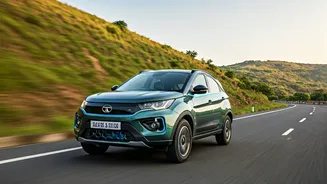
The electric vehicle market has witnessed significant growth, and the Tata Nexon EV has emerged as a popular choice. Buyers are increasingly concerned
with how far a vehicle can travel on a single charge. The Nexon EV's advertised range can be very different from the actual distance achievable in real-world driving situations. This difference is influenced by several elements, including driving style, road conditions, and the use of in-car features. An examination of the real-world range, therefore, provides a more practical perspective for potential owners. It enables them to make well-informed decisions and manage their expectations of the vehicle's capabilities based on their individual driving habits and the environment in which they will be using it. This is particularly crucial for users in India, where varying infrastructural support and diverse driving terrains exist.
Testing Methodology Explained
The methodology used to determine the real-world range usually involves a series of controlled tests to mirror daily driving scenarios. These tests commonly take place in different environments, like city roads, highways, and mixed routes. The vehicle is typically driven until its battery is depleted or reaches a predetermined low state of charge. During the test, multiple factors are considered: the use of air conditioning, the vehicle's speed, and any changes in elevation. The testing process also frequently incorporates varied driving styles, like aggressive acceleration and steady cruising, to see how each impacts range. The data collected from such tests usually include the total distance covered, energy consumption rates (kilowatt-hours per kilometer), and any deviations from the vehicle's indicated range. By systematically recording and analyzing these data, testers aim to provide a realistic assessment of the vehicle's range. This practical data helps to provide a reliable measure of the vehicle's capabilities to prospective consumers.
Driving Conditions Impact
The real-world range of an electric vehicle is considerably impacted by driving conditions. In city driving, stop-and-go traffic can affect the range of the Nexon EV, with frequent acceleration and braking leading to higher energy consumption. This means that if you're frequently caught in traffic jams, you might notice a reduction in the distance you can travel on a full charge. On the other hand, highway driving often allows for more consistent speeds, which can improve efficiency to a certain extent; however, higher speeds increase air resistance, which can reduce the range. Road conditions also have a significant role. Driving on hilly terrains causes increased energy usage because of the constant need for the motor to work harder. Environmental factors also play a part, where extreme temperatures can affect battery performance, and consequently, the range. Thus, these diverse driving conditions affect the actual range of the Nexon EV, making it important for drivers to consider the typical environment in which they operate their vehicles to get a more accurate expectation of performance.
Real-World Range Estimates
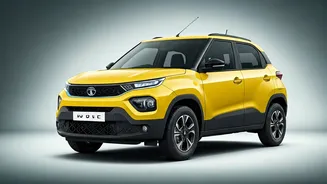
The real-world range of the 2024 Tata Nexon EV will likely vary depending on many factors. However, several reviews and tests should give a good idea of what to expect. Generally, this range might differ from the figures advertised by the manufacturer. The actual range will tend to be lower due to different testing conditions used during the evaluation. Various sources suggest a real-world range between two figures. To be more precise, the figures will depend on factors like driving behavior, conditions, and the car's specific configuration. Considering such variations, potential buyers must gather information from various sources. This could include online forums, reviews, and test drives that assess performance within diverse settings. This strategy helps prospective owners to get an informed view of the vehicle's potential and how well it suits their day-to-day driving routines.
Factors Affecting Efficiency
Several factors directly influence the efficiency of the 2024 Tata Nexon EV. The driving style is one of the main factors, as aggressive acceleration and high-speed driving can consume more energy, thus reducing the range. The vehicle's speed impacts efficiency, with higher speeds resulting in increased air resistance and energy use. Usage of in-cabin features like air conditioning, especially in hot weather, consumes significant power from the battery. The weight carried by the vehicle also plays a role. A heavier load, whether from passengers or cargo, requires more energy to move, thus affecting range. Proper tire pressure helps maintain optimal rolling resistance, which maximizes efficiency. Finally, regenerative braking, which captures energy during deceleration, helps to extend the range. Drivers can modify and improve the range of their EV by monitoring and adjusting these elements.
Range-Extending Strategies
There are several methods drivers can use to optimize the range of their 2024 Tata Nexon EV. The first is to adopt a more conservative driving style, avoiding abrupt acceleration and maintaining a steady speed. Secondly, drivers should use regenerative braking wisely to recover energy while slowing down, which contributes to battery life. They can limit the use of energy-consuming features, like the air conditioner, particularly when the weather is not very warm. Planning and route optimization help to minimize unnecessary driving and maximize efficiency. Drivers should maintain correct tire pressure and carry only the necessary weight to reduce rolling resistance and energy use. Regular maintenance can ensure the vehicle operates at peak performance, with all systems functioning properly. By implementing these strategies, drivers can extend the range of the Nexon EV, enhancing its overall efficiency and driving experience.
Charging Infrastructure Impact
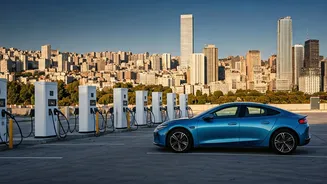
The availability and accessibility of charging infrastructure significantly affect the practicality of owning an electric vehicle like the Tata Nexon EV. The current charging infrastructure in India is still expanding. Charging stations are concentrated in metropolitan areas, with limited access in rural areas and along highways. This uneven distribution may make long-distance travel difficult and necessitate careful planning and route choices for EV owners. The types of chargers available also affect convenience. Fast chargers offer quick charging times. However, standard AC chargers require considerably more time to fully charge the vehicle. The location and dependability of charging stations are also important factors. Reliability issues and long wait times can disrupt travel plans. Moreover, a comprehensive and accessible charging network boosts the adoption of EVs. As the infrastructure improves, the range anxiety decreases, and EV ownership becomes more practical and convenient for Indian drivers.
Comparison to Rivals
In the competitive electric vehicle market, the 2024 Tata Nexon EV has several rivals, and their real-world range performance differs. Compared to some models, the Nexon EV has an advantage in terms of its price point and practicality for the Indian market. However, other competitors might offer longer ranges, advanced features, or superior performance. For instance, some EVs could provide a longer range on a single charge, which is advantageous for drivers who travel long distances regularly. Some rivals might provide faster charging capabilities or a more extensive charging network, which adds to convenience. Other competitors might have advanced features, such as driver assistance systems or luxury interiors, targeting different customer preferences. Therefore, prospective buyers should compare the real-world range, charging infrastructure, features, and price points to determine the best EV for their specific needs and budget. A comprehensive comparison is essential for making an informed choice.
Long-Term Ownership Considerations
Considering the long-term ownership of the Tata Nexon EV involves understanding the factors that affect its performance and value over time. Battery health is a major concern. Over time, EV batteries degrade, decreasing the range and efficiency of the vehicle. Owners should be aware of this and consider the battery warranty and replacement costs. The maintenance needs of an EV are typically lower than those of a gasoline car, with fewer moving parts to maintain. However, EV components, such as the electric motor and battery, may require specialized maintenance. Resale value is another aspect that owners should carefully consider. Factors influencing resale value include battery health, the vehicle's overall condition, and the evolution of EV technology. Regularly maintaining the vehicle and following the manufacturer's recommendations are vital for ensuring a good resale value. Therefore, potential owners must plan long-term to maximize the benefits and reduce the expenses associated with their EV ownership.
Making an Informed Decision
To make an informed decision about the 2024 Tata Nexon EV, potential buyers should thoroughly examine different aspects of the vehicle. Start by assessing their own driving habits and needs, focusing on daily commuting distances and typical driving conditions. Then, examine the real-world range of the Nexon EV, considering the variations that might occur based on the driving environment and style. Compare the Nexon EV to its competitors, taking into consideration factors such as range, price, charging infrastructure, and available features. Consider also long-term ownership aspects, including battery health and maintenance requirements. Take a test drive to experience the vehicle firsthand and evaluate its performance and comfort. Evaluate the local charging infrastructure, looking into the availability of public charging stations in your area. By gathering and analyzing this information, prospective buyers can make a well-informed decision that aligns with their needs and guarantees a satisfying EV ownership experience.