








An Innovative Solution
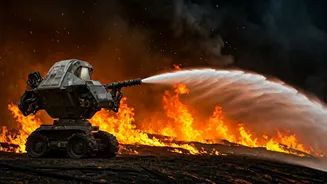
The Indian Army's firefighting bot represents a remarkable advancement in disaster response technology. This indigenous creation is designed to tackle
fires efficiently and safely, particularly in challenging environments where human access is limited or dangerous. The bot's development aligns with the government's 'Make in India' initiative, demonstrating a commitment to self-reliance in critical areas. This initiative not only enhances the Army's operational capabilities but also contributes to the nation's technological prowess, reducing dependence on foreign technologies. With its advanced features, the bot is poised to play a crucial role in protecting lives and safeguarding valuable resources during fire emergencies.
Key Features and Functions
The firefighting bot is equipped with a range of advanced features that make it a formidable force against fire. These include robust construction capable of withstanding extreme temperatures and hazardous conditions. It is usually fitted with high-pressure water cannons or other fire-suppressing agents, enabling it to combat fires from a safe distance. The bot likely incorporates advanced sensors, including thermal imaging cameras. These cameras allow the bot to identify the location and intensity of the fire, even in smoky environments. The bot's operational capabilities can be enhanced by remote control systems, minimizing risk to human personnel. This technology is instrumental in effectively addressing various types of fire emergencies, ranging from forest fires to structural blazes.
Impact on Disaster Management
The introduction of the firefighting bot is set to revolutionize disaster management practices in India. By deploying these robots, the Army can significantly reduce the risk to firefighters and other personnel who previously faced dangerous situations. The bot's ability to operate in inaccessible areas makes it particularly useful in situations such as forest fires. This contributes to better containment and management of wildfires, preventing their spread. Furthermore, this technology promotes faster response times and more efficient fire suppression, potentially saving lives and minimizing property damage. The firefighting bot's capabilities complement existing emergency response systems. This advancement underscores the importance of technological innovation in bolstering India's preparedness for various disaster scenarios.
Promoting Self-Reliance
The development of the firefighting bot reflects India's growing commitment to indigenous innovation and self-reliance, also known as 'Atmanirbhar Bharat'. By designing and manufacturing this technology within the country, India reduces its reliance on foreign imports and strengthens its domestic technological capabilities. The project showcases the skills of Indian engineers and researchers. It drives the creation of a skilled workforce in advanced technology sectors. This initiative encourages local businesses to participate in defense-related projects and create a robust ecosystem for technological innovation. This approach leads to greater national security and economic independence. The success of the firefighting bot serves as an example of what can be achieved through a concerted effort toward self-reliance.
Protecting Forests and Ecosystems
The firefighting bot plays a vital role in protecting India's valuable forests and ecosystems. Forest fires pose a significant threat to biodiversity. These fires can destroy habitats, leading to the loss of plant and animal species. By quickly and effectively extinguishing these fires, the bot helps preserve the natural balance of these ecosystems. It protects against the release of harmful greenhouse gases. Additionally, the bot can be used to monitor and manage controlled burns, which are sometimes necessary for forest maintenance. This contributes to sustainable forest management. The use of advanced firefighting technology is essential for addressing the challenges posed by climate change, particularly as the frequency and severity of wildfires increase in various parts of the country.