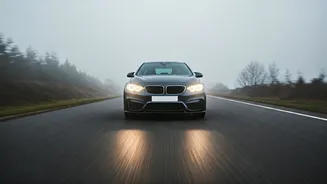

Maintain Safe Distance
Visibility drastically decreases in fog, making it difficult to gauge the speed and distance of other vehicles. Therefore, it's crucial to increase the distance between
your vehicle and the one in front of you. This extended gap gives you more reaction time to sudden stops or changes in traffic flow. Adjust your following distance according to the severity of the fog. If visibility is severely limited, consider significantly increasing the space, possibly doubling or tripling your normal following distance. This precaution dramatically reduces the likelihood of a collision, buying you crucial seconds to react and avoid a potential accident. Remember, you're not just protecting yourself, but everyone else on the road as well. Prioritizing safe distancing is paramount when driving during foggy conditions.
Clear Glass Surfaces
Ensuring clear visibility through your windshield and windows is paramount when driving in fog. Fog can condense on glass surfaces, blurring your view and reducing your ability to see the road ahead. Prior to starting your journey in foggy conditions, thoroughly clean all glass surfaces, inside and out. Use a good quality glass cleaner to eliminate any dirt, grime, or condensation that might impair your vision. Additionally, turn on your defroster to prevent fog from forming on the inside of the windshield. A clear, unobstructed view is critical for safe driving, as it allows you to see other vehicles, road markings, and potential hazards, thus preventing accidents. Maintaining clean glass surfaces is a fundamental aspect of safe driving during foggy weather.
Avoid Hazard Lights
While it may seem counterintuitive, using hazard lights while driving in fog is generally not recommended and can be extremely dangerous. Hazard lights are designed to signal that a vehicle is stationary or experiencing an emergency. Using them while moving can confuse other drivers, making it difficult for them to interpret your intentions and potentially leading to accidents. Instead of hazard lights, rely on your headlights and fog lights to increase your visibility to other drivers and let them know that you are traveling at a safe speed. In foggy conditions, other drivers might fail to notice your vehicle; therefore, using the appropriate lights is far more effective in alerting others to your presence. Remember that your primary goal is to make sure your vehicle is as visible as possible without sending out the wrong signals.
Stay in Your Lane
Maintaining your lane position is crucial in foggy conditions, where visibility is severely limited. Due to restricted views, there's an increased chance of drifting out of your lane, potentially colliding with other vehicles or drifting off the road. Pay careful attention to road markings, such as lane lines, to help guide your vehicle. If you're unsure of your location, slow down and allow the road markings to guide you. Avoid sudden lane changes or overtaking other vehicles, as these maneuvers are especially risky in poor visibility. Keeping the vehicle within its lane allows you to travel safely and predictably, reducing the possibility of accidents. Make sure to concentrate on the path ahead and avoid distractions, as these situations often lead to unsafe driving practices.
Use Fog Lights Properly
Fog lights are specifically designed to improve visibility in foggy conditions and should be used responsibly. Unlike regular headlights, fog lights are positioned low to the ground and project a wide, flat beam of light. This beam illuminates the road directly in front of your vehicle and minimizes the glare that can be caused by fog. Only activate your fog lights when fog is present. Using them in clear conditions can be distracting to other drivers. Make sure your fog lights are in good working order before entering a fog patch. Knowing the correct way to utilize your fog lights during poor visibility is a significant part of safe driving, ensuring that you and other motorists are seen and can safely navigate the road.