



Ample Parking Solutions
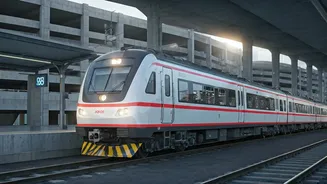
The newly launched Namo Bharat corridor, India's pioneering Regional Rapid Transit System, has strategically addressed a key commuter concern by providing
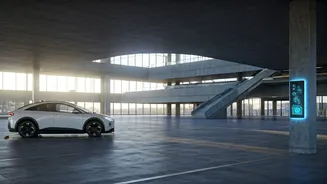
substantial parking facilities. Across its stations, a total capacity for more than 8,000 vehicles has been established, aiming to eliminate the stress of finding parking spaces. This extensive provision is designed to encourage the use of public transport by offering a convenient first and last-mile solution. For instance, Ghaziabad Station boasts the largest car parking area on the corridor, accommodating 370 cars and 632 two-wheelers, serving as a vital inter-connectivity point. Other stations like Sahibabad, Guldhar, and Sarai Kale Khan also offer significant parking capacities, with Sarai Kale Khan in Delhi being particularly well-integrated with other transit modes like the ISBT, Metro, and railway station. Even stations on the Meerut Metro line, such as Partapur and Rithani, contribute to this network by providing dedicated spots for two-wheelers, ensuring that commuters have a secure place for their vehicles regardless of their starting or ending point on the corridor. This comprehensive approach to parking aims to make the entire journey experience as smooth as possible, encouraging more people to opt for this modern transit system over private vehicles.
Smart Travel Companion
Enhancing the commuter experience beyond just transit, the Namo Bharat Connect app offers a suite of digital tools for seamless travel. Passengers can leverage the app to check real-time parking availability at various stations, ensuring they know where to park before they even arrive. Furthermore, the app provides live train tracking, allowing commuters to plan their journey with precision and avoid unnecessary waiting times. Navigational assistance within stations is also integrated, helping users find their way around easily. For those who have misplaced items, a 'lost and found' service is accessible through the app. To further alleviate congestion, dedicated drop-off zones have been established outside stations. To ensure effortless last-mile connectivity, partnerships have been formed with services such as e-rickshaws, feeder buses, cabs, and rental two-wheelers, creating a holistic transportation ecosystem. In areas where direct station parking might be limited, like busy underground stations, arrangements have been made for parking at nearby accessible locations, such as the Abu Lane Market for Begumpul station.
Affordable Parking Rates
To ensure that the extensive parking facilities remain accessible and user-friendly, a structured and affordable pricing system has been implemented. For bicycles, the charges are set at Rs 5 for the initial 10 minutes to 6 hours, with a rate of Rs 10 for periods between 12 to 16 hours, and also for longer durations exceeding 16 hours. Two-wheelers are priced at Rs 10 for durations up to 6 hours, increasing to Rs 25 for 6 to 12 hours, and Rs 30 for longer periods of 12 to 16 hours, and again for over 16 hours. Cars and SUVs will incur a charge of Rs 30 for the first 6 hours, rising to Rs 60 for 6 to 12 hours, Rs 80 for 12 to 16 hours, and Rs 100 for any duration exceeding 16 hours. It is important to note that parking rates at Delhi stations have a slightly different structure to accommodate city-specific demands. At these Delhi stations, bicycles are charged at Rs 5 for up to 6 hours. Two-wheelers cost Rs 20 for the initial 6 hours and Rs 50 for a full 16-hour period. Cars and SUVs in Delhi are charged Rs 50 for up to 6 hours and Rs 100 for 16 hours. This tiered pricing aims to balance affordability for regular commuters with fair usage charges for extended parking.