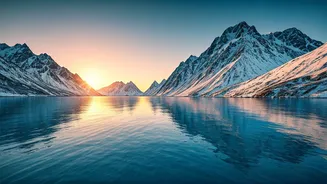






Greenland's Icy Dominion
Leading the pack as the world's colossal island is Greenland, an immense landmass spanning an astounding 2,166,086 square kilometers. This vast territory,
largely covered in ice, showcases a unique arctic ecosystem and holds significant geological importance. Its sheer size dwarfs all other islands, making it a truly remarkable geographical feature that influences global climate patterns. The scale of Greenland's land area is a testament to the diverse and often extreme environments our planet harbors, reminding us of the immense power of nature.
New Guinea's Tropical Extent
Following Greenland, the island of New Guinea secures the second position with an impressive area of 785,753 square kilometers. This tropical giant is renowned for its incredible biodiversity, boasting dense rainforests teeming with unique flora and fauna. Its rich cultural tapestry is as diverse as its natural environment, with numerous indigenous groups inhabiting its varied landscapes. New Guinea's substantial size supports a complex ecological system and has played a significant role in human history and exploration, making it a focal point for both scientific study and cultural fascination.
Borneo's Lush Expanse
Claiming the third spot on our list is Borneo, a vast island covering 743,330 square kilometers, famed for its ancient rainforests and remarkable wildlife. This island is a treasure trove of biodiversity, home to species found nowhere else on Earth, including the orangutan. Sharing its landmass among three nations—Indonesia, Malaysia, and Brunei—Borneo presents a complex geopolitical and ecological landscape. Its immense forests are vital for regulating global climate and supporting countless species, underscoring its critical importance in conservation efforts worldwide.
Madagascar's Unique Island
The island of Madagascar, situated off the coast of East Africa, ranks fourth with an area of 587,713 square kilometers. It is celebrated for its exceptionally high rate of endemism, meaning a vast majority of its plant and animal species are found only on this island. This ecological distinctiveness stems from its long geological isolation, allowing unique evolutionary paths to flourish. From its iconic lemurs to its baobab trees, Madagascar is a living laboratory of biodiversity and a crucial subject for understanding evolutionary processes and conservation challenges.
Baffin Island's Arctic Realm
The fifth largest island globally is Baffin Island, encompassing 507,451 square kilometers within Canada's Arctic territory. This island is characterized by its rugged terrain, dramatic fjords, and a challenging Arctic climate. Despite its harsh environment, Baffin Island is home to a resilient Inuit population and a unique array of wildlife adapted to polar conditions. Its vast, sparsely populated landscapes offer breathtaking natural beauty and significant geological features, making it a key component of Canada's northern geography and a site of important ecological research.
Sumatra's Biodiversity Hub
Ranking sixth is Sumatra, a large island in Indonesia covering 443,066 square kilometers. Sumatra is renowned for its rich volcanic landscapes and critically endangered species, including tigers, elephants, and orangutans. The island's diverse ecosystems, from dense tropical rainforests to volcanic mountains, support an astonishing array of life. However, it also faces significant environmental pressures, highlighting the ongoing struggle to balance development with the urgent need for conservation of its precious natural heritage.
Honshu's Cultural Heart
As the seventh largest island, Honshu, part of Japan, spans 225,800 square kilometers and is the nation's most populous and economically significant island. It is the cultural and political heart of Japan, home to major cities like Tokyo, Osaka, and Kyoto. Honshu's diverse geography features mountains, including the iconic Mount Fuji, fertile plains, and a long coastline. This island's blend of ancient traditions and cutting-edge modernity makes it a compelling destination and a vital center of global culture and innovation.
Victoria Island's Northern Reach
Victoria Island, another vast Canadian Arctic island, ranks eighth with an area of 217,291 square kilometers. Its landscape is marked by a low-lying, undulating terrain, numerous lakes, and a harsh polar climate. Similar to Baffin Island, it is primarily inhabited by Inuit communities who have adapted to this demanding environment. The island's significance lies in its role as a critical habitat for Arctic wildlife, including migratory birds and marine mammals, and its contribution to understanding the unique ecosystems of the far north.
Great Britain's Historic Isle
The ninth largest island is Great Britain, encompassing 209,331 square kilometers. This island nation is historically rich and culturally influential, comprising England, Scotland, and Wales. Its varied landscapes range from rolling hills and fertile farmlands to rugged highlands and extensive coastlines. Great Britain has been a crucible of industrial, political, and cultural revolutions, shaping much of the modern world and offering a profound glimpse into centuries of human endeavor and natural beauty.
Ellesmere Island's Remote Beauty
Concluding our list at number ten is Ellesmere Island, a remote Canadian Arctic territory of 183,965 square kilometers. This island is characterized by its dramatic mountainous terrain, glaciers, and an extreme Arctic environment. It is one of the northernmost inhabited places on Earth and serves as a vital research area for glaciology and Arctic ecology. Ellesmere Island's stark, breathtaking beauty and its role in understanding polar regions make it a significant, albeit rarely visited, geographical marvel.