







Revised Cancellation Policies
Indian Railways has significantly revised its ticket cancellation and refund procedures to deter speculative bookings and boost real-time seat availability.
The window for maximum refund has been extended from 48 hours to over 72 hours prior to the train's departure. For cancellations made between 72 and 24 hours before departure, a 25% penalty will be applied. This penalty increases to a 50% deduction for cancellations between 24 and 8 hours before departure. Notably, refunds are now entirely disallowed for tickets cancelled within 8 hours of the train's scheduled departure, a substantial increase from the previous 4-hour cutoff. These changes aim to ensure that tickets are more reliably available for genuine travelers closer to the departure time.
Waitlisted Passenger Restrictions
To bolster safety and combat overcrowding, Indian Railways has implemented a strict ban on waitlisted (WL) passengers entering reserved compartments. This rule now prohibits individuals with waitlisted tickets from boarding AC 3-Tier, AC 2-Tier, and First Class coaches. Previously, passengers with counter-booked waitlisted tickets would sometimes occupy reserved seats in anticipation of chart updates. Under the new guidelines, if a ticket remains waitlisted after the final chart preparation, it is considered invalid for travel in reserved coaches. Waitlisted passengers are now relegated to unreserved general coaches or are eligible for an automatic refund if they choose not to travel. Violators found in reserved compartments face substantial fines, ranging from Rs 250 for Sleeper class to Rs 440 for AC classes, and will be deboarded. To manage this, the railways is establishing designated holding areas at approximately 100 stations for waitlisted passengers.
Lower Berth Sleeping Etiquette
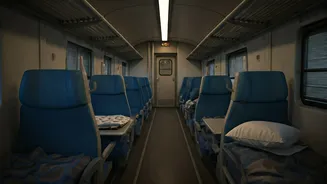
To proactively resolve conflicts over seating and sleeping arrangements, Indian Railways has formalized the sleeping hours for all passengers. The designated sleeping window is now strictly from 10:00 PM to 6:00 AM. This rule has direct implications for those occupying lower berths. Passengers in middle and upper berths are now legally obligated to keep their berths folded during the daytime, between 6:00 AM and 10:00 PM, to allow lower berth passengers to sit comfortably. Conversely, passengers in lower berths cannot claim exclusive use of the space for sleeping during daylight hours. They must share the seating area with co-passengers until 10:00 PM, after which the middle berth can be unfolded, and all passengers can prepare for sleep.
Enforcing Quiet Hours
Ensuring a peaceful overnight travel experience is a priority for Indian Railways, leading to a reinforced 'Quiet Hours' policy. From 10:00 PM onwards, a strict directive prohibits passengers from playing music or videos through mobile speakers within shared coaches. Similarly, loud phone conversations are also forbidden during this period. To enjoy personal audio or video content during these quiet hours, passengers are required to use earphones. This measure aims to create a more serene environment for all travelers during the night.
Post-10 PM Ticket Checks
In a further effort to safeguard passengers' rest during overnight journeys, Ticket Examiners (TTEs) have been instructed not to conduct ticket or ID checks after 10:00 PM, once passengers have settled into their berths. This new rule ensures that travelers can sleep without interruption from routine verification procedures. However, it is important to note that passengers boarding the train after 10:00 PM will still be subject to ticket verification.
Aadhaar for IRCTC Bookings
To effectively combat ticket touting and the misuse of automated booking software, Indian Railways has implemented stringent digital security measures. When booking general quota tickets via the IRCTC website or mobile application, passengers are now required to undergo mandatory Aadhaar authentication during the initial 15 minutes of the booking window, a period known for high competition. Furthermore, any passenger seeking to avail travel concessions, such as senior citizens, students, or individuals with disabilities, must have their Aadhaar permanently verified and linked to their IRCTC profile to be eligible for these benefits.