






A Swift Connection Unveiled
The much-anticipated 'missing link' of the Mumbai-Pune Expressway is poised to revolutionize travel between India's bustling financial capital and its
cultural heart. Scheduled for inauguration on Friday, May 1, 2026, which also coincides with Maharashtra Day, this engineering marvel is designed to shave off a substantial 30-45 minutes from the current journey. More significantly, it offers a direct bypass of the notoriously congested ghat section near Lonavala, a bottleneck that has challenged commuters for over two decades since the expressway's inception in 2002. This new segment represents a monumental leap in the driving experience, promising a seamless and expedited passage for millions of travelers.
Engineering Marvel Explained
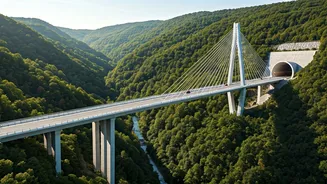
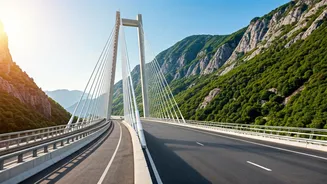
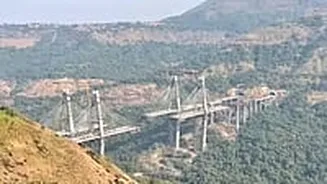
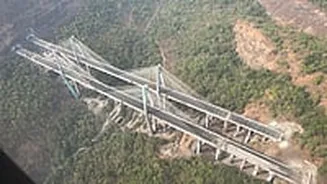
At its core, the missing link is an impressive feat of modern engineering, ingeniously combining two distinct tunnels with a striking cable-stayed bridge positioned precisely in the heart of the Western Ghats. The tunnel segment leading towards Mumbai measures a respectable 1.67 kilometers in length. In contrast, the tunnel facilitating travel towards Pune is considerably more extensive, spanning an impressive 8.92 kilometers. Connecting these two vital arteries is a magnificent 650-meter-long cable-stayed bridge, engineered with remarkable resilience to withstand wind speeds exceeding 250 kmph. The entire integrated route of this missing link covers a total distance of 13.3 kilometers, a notable reduction compared to the existing 19.8-kilometer route that navigates the ghats, highlighting the efficiency and innovation embedded within its design.
User Benefits and Regulations
Commuters can rejoice as the state government has confirmed that no additional toll fees will be levied for utilizing this cutting-edge missing link. This thoughtful decision aims to encourage its widespread adoption and ensure immediate benefits for travelers. However, for an initial period of six months following its opening, access will be restricted exclusively to light vehicles. Heavy vehicles will continue to be routed through the established ghat section, allowing for a phased introduction and smooth operational integration. Furthermore, drivers can anticipate significantly higher speed limits: 120 kmph on the open stretches and a still-impressive 100 kmph within the tunnels, a stark contrast to the current 60 kmph limit prevalent on some of the more challenging ghat sections of the expressway, promising a vastly improved and swifter commute.