


Ultra-Long Range Battery
A significant breakthrough in electric vehicle technology is on the horizon, promising an extraordinary driving range of up to 1500 kilometers on a single
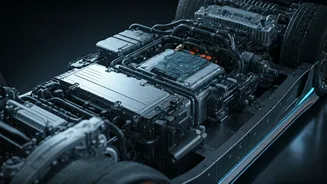
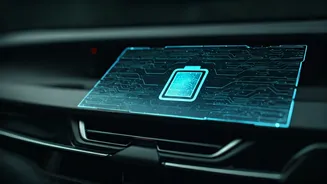
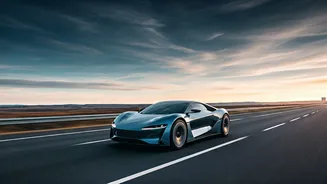
charge. This development is driven by a novel all-solid-state battery, codenamed 'Rhino,' which has achieved an impressive energy density of 600 Wh/kg. This represents a substantial leap forward, addressing one of the primary concerns for potential EV adopters: range anxiety. The technology is slated for initial testing in the Exeed ES8 model, with broader market introduction anticipated around 2027. The enhanced energy density not only translates to extended travel distances but also opens doors for improved safety features, faster charging capabilities, and a longer operational lifespan for the battery packs compared to current lithium-ion solutions. This innovation is a testament to the rapid progress in battery science, aiming to make electric vehicles a more practical and appealing choice for a wider audience.
Expanded Battery Lineup
Beyond the flagship all-solid-state battery, the 'Rhino' series encompasses a spectrum of advanced battery solutions designed to cater to different vehicle models and performance requirements. This includes a 400 Wh/kg solid-state 'S-Series' battery, earmarked for the Exeed ES sedan, and a semi-solid-state 'E liquid' battery intended for the Exeed EX7. The 'E liquid' variant is particularly noteworthy for its exceptional charging speed, capable of adding approximately 500 kilometers of range in a mere eight minutes, supported by a charging power of up to 1,200 kW. These diversified offerings highlight a strategic approach to electrifying various segments of the automotive market, ensuring that different models can benefit from tailored battery performance, whether it's extreme range or ultra-fast charging.
Industry-Wide Advancements
This surge in battery innovation is not unique to one manufacturer; it reflects a broader trend within China's automotive industry to lead in solid-state battery production. Competitors are also making significant strides. For instance, another major player is preparing to trial its 'Golden Bell' battery, boasting 400 Wh/kg and also claiming over 1500 km of range, with trials scheduled for Q3 of 2026. Additionally, one company has already successfully tested a prototype with 350 Wh/kg in harsh, cold conditions, achieving more than 1000 km of range. Another prominent automaker has introduced its 'Blade Battery 2.0,' offering over 1000 km of range and impressively fast 1500 kW charging. These collective efforts underscore a dynamic and competitive landscape focused on pushing the boundaries of EV performance and viability.
Future Implications for EVs
The development and impending deployment of batteries offering such extended ranges and rapid charging capabilities are set to fundamentally alter the electric vehicle market. While 1500 km of range might exceed the daily commuting needs for many, it represents a crucial step in alleviating range anxiety and encouraging mass adoption of electric cars. As these advanced battery technologies become more mature and widely available, they have the potential to reshape the entire automotive industry, especially in regions where fuel costs are rising and environmental concerns are paramount. The enhanced safety, longevity, and performance characteristics inherent in these next-generation batteries promise a more convenient and sustainable future for personal transportation, making EVs a truly viable alternative to traditional internal combustion engine vehicles.