





Initial Impressions
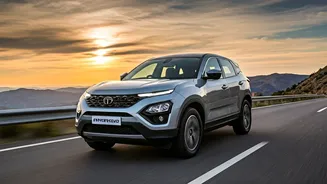
Upon first glance, both the 2026 Tata Harrier and Safari Petrol models present themselves with a refreshed design that builds on their established appeal.
The exterior enhancements contribute to a more modern and striking appearance, grabbing attention immediately. These models aim to improve upon their predecessors, promising an elevated driving experience. The interior sees notable upgrades that focus on enhancing comfort and convenience for both the driver and passengers. These improvements are coupled with the introduction of the 'Hyperion' petrol engine, which brings a new dimension to their performance. The goal of this review is to determine how well these updates and the new engine translate into real-world driving scenarios. This helps to accurately assess if the 2026 Harrier and Safari models successfully meet the expectations set by their innovative features and refreshed designs.
Hyperion Engine Performance
The 'Hyperion' petrol engine is a core element in the 2026 Tata Harrier and Safari models, and it significantly influences their performance metrics. Evaluators thoroughly analyzed the engine's power delivery, smoothness, and responsiveness across various driving conditions. The Hyperion engine is designed to balance performance and efficiency, a critical aspect of modern automotive engineering. During testing, experts focused on how the engine performs during city commutes, highway cruising, and challenging terrains. This includes assessing acceleration, overtaking capabilities, and overall drivability. The review includes data on fuel consumption, which is a major concern for potential purchasers. The engine's integration with the transmission system also played an important role in the evaluation process. Overall, the Hyperion engine's performance determines if it meets the expectations set forth for it.
Driving Experience Analysis
The driving experience is a crucial aspect of the 2026 Tata Harrier and Safari Petrol models. The review focused on the vehicle's handling characteristics, which include steering feel, body roll, and overall stability. Analysts assessed the ride quality over different road surfaces, aiming to determine how well the suspension system absorbs bumps and vibrations. The noise, vibration, and harshness (NVH) levels are also significant as they contribute to the comfort of the passengers. Testing included various driving scenarios: urban traffic, open highways, and off-road conditions to evaluate the versatility of the vehicles. The ergonomics of the driver's seating position, the visibility, and the ease of accessing controls were carefully checked. The objective was to present a well-rounded assessment of the driving dynamics and how they correlate to user satisfaction. The driving experience evaluation provides essential insight into these models' practical usability.
Interior & Features
The interior of the 2026 Tata Harrier and Safari Petrol models comes with substantial upgrades, designed to improve comfort and convenience. The evaluation includes a detailed examination of the materials used throughout the cabin, focusing on their quality and feel. The review delves into the layout of the dashboard, center console, and seating arrangements to assess the practicality and design appeal of the interior space. The infotainment system, with its touchscreens, connectivity options, and ease of use, gets a thorough review. The evaluation also considers the inclusion of advanced driver-assistance systems (ADAS) and other technological features such as automatic climate control, premium audio systems, and wireless charging. The focus is to determine how well these features integrate with each other and enhance the overall passenger experience. The assessment also encompasses the storage solutions available, such as cupholders, glove compartments, and cargo space, providing insights into the day-to-day usability of the vehicle.
Performance and Rivals
The 2026 Tata Harrier and Safari Petrol models have been assessed in a highly competitive market, so this review discusses them in relation to their key rivals. Performance metrics such as acceleration, fuel economy, and handling characteristics are compared against the competition, to show where the Harrier and Safari fit in the market. The evaluation also considered factors such as price, features, and brand perception to understand the competitive edge. The article considers a wide variety of competitors, comparing design, interior features, and technology. This includes a review of how each vehicle handles different driving conditions, especially in urban environments and on highways. The overall goal is to offer readers a clear sense of how the Harrier and Safari compare against other popular SUVs in terms of value, practicality, and driving experience.
Conclusion: Hyperion Hype?
The final conclusion of this first-drive review brings together all the observed findings regarding the 2026 Tata Harrier and Safari Petrol models. The 'Hyperion' engine’s performance, combined with its driving dynamics, interior comfort, and features, is re-evaluated. The review concludes by answering the central question: do the Harrier and Safari live up to the hype? The summary of the assessment highlights the strengths and weaknesses of each vehicle and provides a comprehensive perspective for potential buyers. It also gives an idea of how the models are positioned in the Indian automotive market, with a focus on their overall value and competitive position. The final conclusion will either solidify or dispel any initial impressions or hopes based on the initial marketing or previous model reviews. It reflects whether the changes introduced in the 2026 models make a compelling case for a purchase.