






Mythological Origins & Splendor
Somnath Temple holds the esteemed title of the first among the twelve Jyotirlingas dedicated to Lord Shiva, making it a paramount pilgrimage destination
for Hindus. Its legendary origins are intertwined with Soma, the Moon God, who, according to ancient lore, constructed the original golden shrine to appease Lord Shiva and regain his lost luminescence after a divine curse. This hallowed site, historically known as Prabhasa, meaning 'place of brightness' or 'splendor,' is deeply embedded in some of Hinduism's most ancient scriptures, including the Rigveda and the Puranas. Devotees believe the very essence of the location resonates with the celestial rhythm of lunar cycles, imbuing it with a unique spiritual energy that is palpable even to the uninitiated visitor. The temple's enduring presence in these sacred texts underscores its profound historical and spiritual weight, drawing pilgrims seeking solace and divine connection for millennia.
Unique Seaside Location
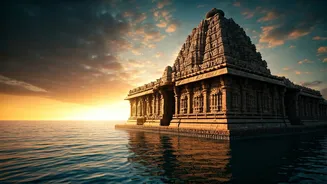
The Somnath Temple's setting is as awe-inspiring as its spiritual significance. It doesn't merely border the Arabian Sea; it stands poised at its very edge, with the constant rhythm of the waves providing a natural, meditative soundtrack to the pilgrimage experience. This dramatic location is further amplified by a remarkable geographical fact confirmed by an ancient inscription on the temple complex's Baan Stambh, or Arrow Pillar. This inscription, remarkably verified by modern satellite data, declares that between this coastline and the South Pole, there is no landmass whatsoever – only an uninterrupted expanse of approximately 10,000 kilometers of ocean. The foresight and astronomical knowledge of ancient scholars to document such a precise geographical phenomenon is astonishing, underscoring the profound connection between this sacred site and the vastness of the cosmos, a detail easily overlooked by casual observers.
Resilience Through History
The historical narrative of Somnath Temple is a testament to its enduring spiritual importance, often marked by cycles of destruction and rebirth. Throughout the centuries, the temple has been a target for invaders, frequently plundered and demolished due to its religious sanctity and accumulated wealth, with the raid by Mahmud of Ghazni being particularly infamous. However, what distinguishes Somnath's story is not the devastation itself, but its subsequent reconstruction. Following India's independence, the monumental task of rebuilding was spearheaded by Sardar Vallabhbhai Patel himself. Construction recommenced in 1947, culminating in the current magnificent structure completed in the 1950s. Built using traditional Indian temple architectural styles, the present-day temple stands as a powerful symbol of India's resilience and a cultural commitment to preserving its heritage, transcending its role as merely a place of worship to become a statement of endurance.
Architectural Grandeur
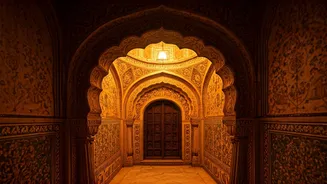
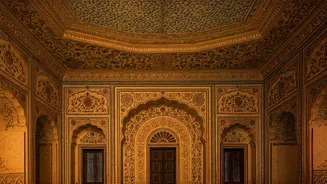
The architectural style of the Somnath Temple, known as Māru-Gurjara, is a feast for the eyes, showcasing intricate artistry and divine representation. The central tower, or shikhara, soars to a height of approximately 155 feet, elegantly topped with a striking copper kalash. Every surface of the temple is adorned with elaborate carvings that depict a pantheon of gods and goddesses, floral motifs, depictions of animals, and scenes from Hindu mythology. These carvings are not merely ornamental; they are integral to the narrative and spiritual ambiance of the temple. The Sabha Mandapa, the grand assembly hall, exudes an aura of profound significance, its walls narrating the epic stories of Lord Shiva through masterful artistry, creating an atmosphere that feels both majestic and deeply resonant with devotion.
Spiritual Practices & Visitor Info
Adjacent to the main temple lies the Triveni Sangam, a confluence where three sacred rivers – the Kapila, Hiran, and Saraswati – are believed to merge. Pilgrims traditionally partake in a purifying ritualistic bath at this Sangam before entering the main shrine, an act considered essential for cleansing both the body and the spirit. The expansive temple complex further houses numerous smaller shrines, each intricately linked to the rich tapestry of Hindu mythology that defines the site. The temple welcomes visitors from 6 AM to 9 PM, with three daily Aarti ceremonies held at 7 AM, noon, and 7 PM, each drawing devout crowds. An immersive light and sound show, narrated by Amitabh Bachchan, runs nightly from 7:45 PM to 8:45 PM, offering a captivating journey through the temple's storied past. Visitors are advised to dress modestly, and while photography is prohibited inside the main sanctum, it is permitted in the outer courtyard.