




Economic Development Engine
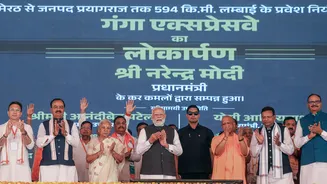
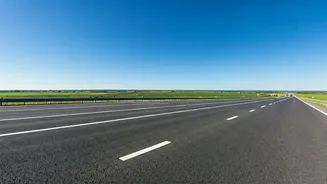
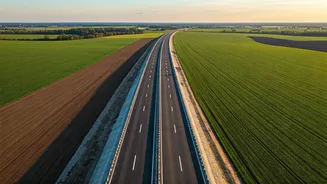
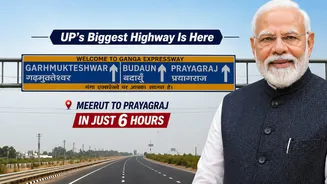
The Ganga Expressway, stretching an impressive 594 kilometers and connecting Meerut to Prayagraj, is engineered to be far more than a mere transportation
route; it's envisioned as a comprehensive economic development corridor. The project is designed to invigorate industrial activity by integrating 12 planned Industrial Nodes along its path, with a substantial investment of Rs 46,660-47,000 crore anticipated. This focus includes allocating approximately 2,635 hectares for manufacturing and logistics facilities, aiming to establish a district-level industrial corridor across the entire expressway's length. This strategic development is projected to significantly enhance freight movement and foster greater regional integration, creating a robust economic spine for Uttar Pradesh.
Real Estate Boom Ahead
Industry experts foresee a significant surge in real estate activity directly attributable to the Ganga Expressway's existence. Cities and developing micro-markets situated along its 594km stretch are expected to witness substantial property value appreciation. For instance, Meerut has already experienced over 40% land appreciation in five years, with further demand anticipated in Ghaziabad due to improved transport links. Projections suggest select markets could see 30-40% appreciation, bolstered by access to the Jewar airport and Yamuna Expressway. Prayagraj is also positioned for considerable growth, with an estimated 20-30% appreciation over the next three to five years. Crucially, Tier-II cities are identified as potential leaders in the next housing growth cycle, and land within a 5-10 km radius of the expressway could appreciate by 30-50% over four to six years, signaling a broader urbanisation trend driven by this infrastructure.
Logistics and Industry Gains
The logistics sector is anticipated to reap the most substantial long-term benefits from the Ganga Expressway. The reduced freight costs and quicker turnaround times facilitated by the expressway are expected to positively impact sectors from FMCG to textiles. Analysts estimate a potential 15-20% reduction in inventory carrying costs, a significant figure given that logistics costs in India often represent 13-14% of GDP. For bulky goods like furniture and appliances, transport routes could shorten by 40-50%, with overall logistics costs for heavy goods potentially decreasing by 10-15%. Furthermore, the corridor is set to bolster warehousing and delivery infrastructure, particularly in Tier-II and Tier-III cities, which are becoming increasingly vital for e-commerce expansion. Warehousing demand is predicted to grow by 25-35%, with districts like Shahjahanpur, Hardoi, and Rae Bareli likely to experience heightened economic activity due to improved logistics.
Agriculture and Tourism Boost
Beyond industrial and logistical advantages, the Ganga Expressway is poised to offer significant benefits to the agricultural sector and the tourism industry. Improved connectivity will enable faster and more cost-effective movement of agricultural produce, directly benefiting farmers. The tourism sector is also expected to see a positive impact, particularly for destinations like Varanasi, Garhmukteshwar, and Prayagraj's Triveni Sangam. Increased investment in religious tourism is anticipated, which could spur secondary economic growth in these areas. The expressway's ability to connect diverse regions will also facilitate easier access for tourists and pilgrims, potentially leading to increased visitor numbers and related economic opportunities.
Bridging Regional Divides
A critical objective of the Ganga Expressway project is to address and bridge the economic disparities between western and eastern Uttar Pradesh. Historically, western Uttar Pradesh has enjoyed a stronger industrial base and greater investment, while eastern regions have remained more reliant on agriculture and lagged in development. By creating a seamless all-weather link between Meerut in the west and Prayagraj in the east, the expressway is designed to foster more balanced regional development. This enhanced connectivity aims to bring investment and industrial opportunities to historically less developed areas, promoting more equitable economic growth across the entire state and strengthening its overall economic fabric.
A Unique Development Model
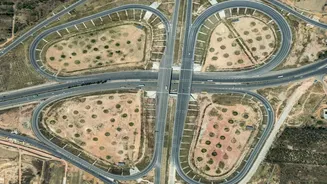
What distinguishes the Ganga Expressway from conventional highway projects is its integrated approach to development. It is conceptualized not just as a road but as a comprehensive development corridor that meticulously combines essential infrastructure with strategic economic planning. The project synergistically integrates road infrastructure with industrial clusters, advanced logistics hubs, crucial airport connectivity, and planned warehousing facilities, alongside urban growth initiatives. This multi-faceted strategy positions it as a pioneering development corridor model. The potential realization of a significant portion of the Rs 47,000 crore investment pipeline could profoundly reshape Uttar Pradesh's economic landscape, impacting much more than just travel times.